
BC Salmon Farming - The Youngest Workforce in Canadian Food Production
Salmon farming gives young people a year-round career and a reason to stay in coastal B.C. The federal government's 2029 salmon farming ban closes that path.
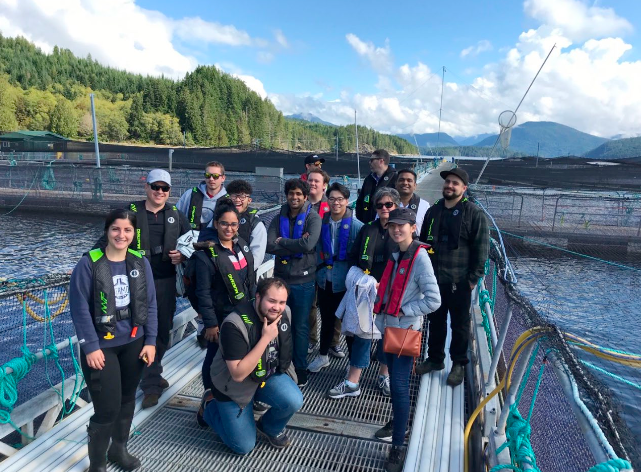
Ask a young person in Port Hardy what it takes to build a life where they grew up, and the honest answer is usually a job that lasts the whole year. Not a summer season. Not a stretch of shift work that ends when the weather turns. A real career, with a paycheque every month, in the community they already call home.
For thousands of young people on the coast of British Columbia, salmon farming has been that answer.
The Trudeau-era 2029 net-pen ban puts that out of reach.
A young sector, by the numbers
Salmon farming is not an aging industry trying to recruit its replacements. It is one of the youngest workforces in Canadian food production. Industry figures put roughly two-thirds of aquaculture workers under the age of 35, with an average employee age around 40, well below the rest of Canadian agriculture.
The 2029 ban puts all of this at risk. This is not a sector winding down on its own, where a closure simply hurries along a decline already underway. It is a sector that young people are still choosing, still entering, still building careers in. The ban cuts that off mid-stride with a ripple effect across communities and the province.
A young workforce is also a sign of a sector with a future. Older industries lose people to retirement faster than they can replace them. Salmon farming has the opposite profile: a base of workers in their twenties and thirties with decades of working life ahead of them, in communities that badly need exactly that.
Year-round work in places that do not have much of it
Salmon farming jobs are concentrated in the parts of B.C. that need them most. The sector employs people in communities such as Klemtu, on the Central Coast, Port Hardy and Port McNeill at the north end of Vancouver Island, and the Campbell River region, places where stable, full-time employment has never been easy to find.
These are not seasonal jobs. Salmon farming runs every month of the year, which means the work runs every month of the year too. That matters in a coastal economy built around fishing seasons, tourism seasons, and resource projects that come and go. A year-round paycheque is what lets a young person sign a lease, take on a mortgage, or plan past the next few months.
The average wage in the sector sits roughly 30 percent above the provincial median employment income, and those jobs land in regions where unemployment tends to run higher than the provincial average. For a young worker, that combination is rare: good money, close to home, all year.
Salmon farming supports about 4,500 jobs across the province, the majority of them in remote Indigenous and coastal communities where the alternative is often no job at all, or a job somewhere else.
The work is not what people picture
There is an old image of fish farming as rope, rubber boots, and not much else. It is long out of date, and the gap between that old picture and present day farming is a big part of why the sector draws young people in.
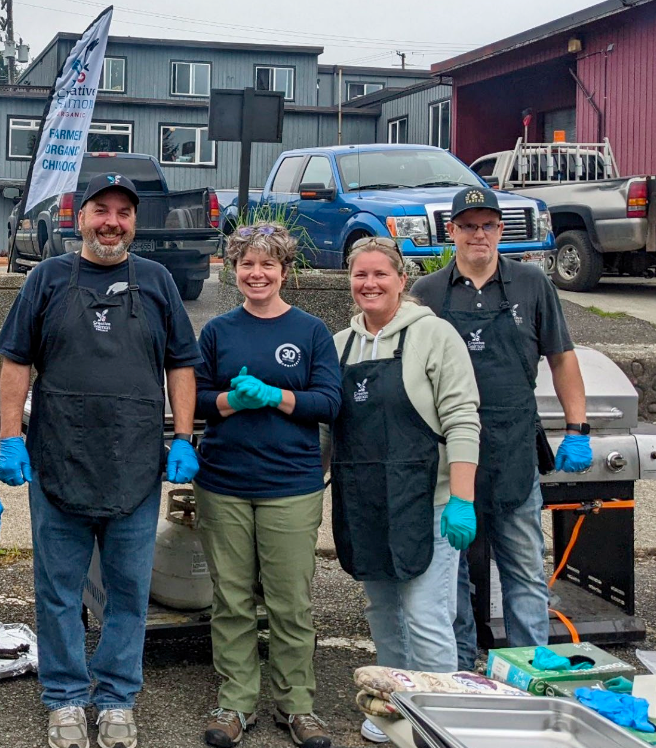
A modern salmon farm runs on sensors, cameras, and data. Teams monitor water conditions in real time, track fish health through underwater systems, run feeding technology, and operate vessels and equipment that take training to handle well. The roles range from marine technicians and fish health staff to data and operations work. For a young person who grew up on the water and is good with technology, it is work that uses both.
That changes the pitch to the next generation. A career in salmon farming is a skilled, modern job that happens to be available in a small coastal town, which is exactly the kind of opportunity most small coastal towns are fighting to keep.
It also builds something beyond the individual paycheque. Young workers who train in aquaculture gain skills that carry across the marine economy. The sector has its own next-generation network, the Young Salmon Farmers of B.C., whose members run beach clean-ups, volunteer on eelgrass restoration, and raise money for community food banks. People who plan to stay tend to invest in the place they are staying.
What a young person loses when the work leaves
Every job that leaves a small community takes more than a paycheque with it.
When a young person cannot find year-round work at home, they leave. They move to a city, or out of the province, and the community loses a teacher's future partner, a volunteer firefighter, a hockey coach, a parent at the school. Small coastal B.C. towns have watched this happen for a generation. Salmon farming is one of the few sectors that has reversed this trend, giving young people a concrete reason to build their lives where their families already are.
The federal government's 2029 salmon farming ban cuts that pathway off. It does not replace it. The word offered to these communities has been "transition," but a transition needs a destination, and for a 24-year-old marine technician in Port McNeill, nobody has named one.
This is the part of the ban that does not show up in a national headline. The cost is measured in young people who would have stayed and now will not.
A practical decision the government can make
Reversing the Trudeau-era ban keeps a working career path open for the next generation on the coast. It protects about 4,500 jobs, holds skilled young workers in the Indigenous and coastal communities that have invested in training them, and signals that Canada intends to grow its own food with its own people.
Coastal First Nations and the communities alongside them are not asking for a rescue. They are asking Canada to let a sector that already works keep working, so the young people who want to stay have a reason to.
The investment is ready. The workforce is ready, and it is young. The decision sits with the federal government, and reversing the ban is a step it can take now.
References
- BC Salmon Farmers Association. 2024. Caring for Communities: Salmon Aquaculture in Coastal Communities, in Modern Salmon Farming in BC: A Review. BC Salmon Farmers Association, Campbell River, British Columbia.
- BC Salmon Farmers Association. Economic Impact FAQ. Available at bcsalmonfarmers.ca/faq/
- RIAS Inc. Economic and Financial Impacts of the Transition Plan for BC Salmon Farms. Prepared for the BC Salmon Farmers Association, 2023.
- Canadian Aquaculture Industry Alliance. Benefits to Canadians. Available at aquaculture.ca
Frequently asked
How many jobs does salmon farming support in British Columbia?
Salmon farming supports about 4,500 jobs, the majority in remote Indigenous and coastal communities where alternative year-round employment is limited.
Why does salmon farming have a young workforce?
Aquaculture is a modern, technology-driven sector, and it has one of the youngest workforces in Canadian food production. Industry figures put roughly two-thirds of aquaculture workers under the age of 35.
What kind of work does a modern salmon farm involve?
Modern salmon farming is technology-driven work. Farm teams run sensor networks and monitoring systems, manage fish health, operate vessels, and handle data, alongside hands-on roles on the water.
Coalition of First Nations for Finfish Stewardship