
Wildlife on the Coast: How Farms and Marine Life Coexist
Over a decade of reporting data shows BC salmon farms and marine wildlife coexist responsibly, with mortalities dropping 97% since the industry adopted a voluntary no-kill policy.
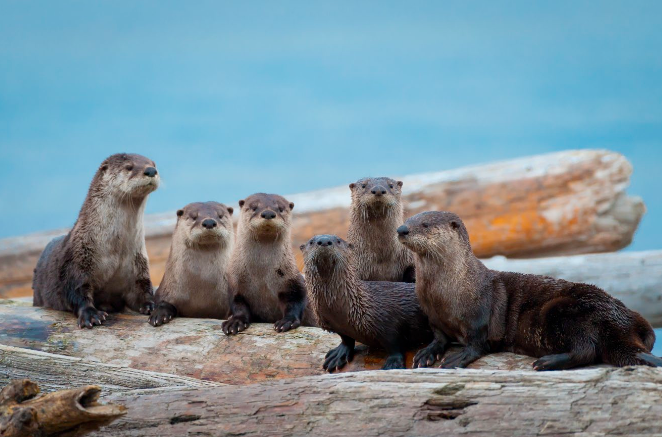
Wildlife on the Coast: How Farms and Marine Life Coexist
Salmon farms sit in the ocean. The ocean is full of animals. So the question people ask, do farms and wildlife get along, is a fair one. And the answer, backed by over a decade of mandatory reporting data, is more encouraging than most people expect.
The numbers
From 2011 to 2022, there were 431 megafauna mortalities at salmon farms across British Columbia. That's the total. Megafauna, in DFO's definition, includes marine mammals such as whales, dolphins, porpoises, seals, and sea lions, as well as turtles and sharks.
Of those 431, 98% were California sea lions and harbour seals. Zero reported mortalities of sharks, turtles, otters, porpoises, or dolphins over the entire period. Zero orcas. The trajectory matters as much as the total. In 2011, there were 304 mortalities. By 2019, there were zero. The ten-year average from 2013 to 2022 works out to roughly 10 per year, or about one mortality per seven operating farms annually.
That drop didn't happen by accident.
The no-kill decision
In 2012, B.C. salmon farmers made a voluntary, sector-wide decision to implement a no-kill policy for seals and sea lions. Before that, DFO had authorized euthanasia as a management tool when marine mammals couldn't be deterred from farm pens. The industry chose to stop, invested in better infrastructure and staff training, and redesigned how farms deal with persistent animals.
In 2016, DFO formally prohibited authorized euthanasia in line with the US Marine Mammal Protection Act. But the industry was already four years ahead of that regulation.
The results show up clearly in the data. California sea lion mortalities dropped from 232 in 2011 to single digits in most years since. Harbour seal mortalities dropped from 70 in 2011 to zero or near-zero in recent years. Farms also phased out shark guards at the bottom of containment nets, which had been a source of entanglement for seals and sea lions.
Why these animals are there in the first place
B.C.'s marine mammal populations have been growing significantly. Harbour seal populations increased from about 10,000 in the 1960s, when hunting was still legal, to over 100,000 by the early 2000s. DFO considers the population fully recovered. California sea lion numbers in B.C. have tripled since 2010, reaching about 13,600. Steller sea lion populations are also expanding, with more rookeries and year-round haul-out sites.
These are animals that eat fish. A farm full of salmon is obviously attractive to them. The challenge for farmers is keeping sea lions out without harming them. These are very intelligent, very persistent animals with excellent memory. Some individuals learn to breach exclusion systems and come back repeatedly.
How farms keep wildlife safe
Modern farms use a layered prevention system. Jump nets rim the outside of every sea pen and extend at least one metre above the water. In areas with high sea lion activity, farms add taller perimeter fences, some over seven feet high. Predator nets surround the containment pens underwater. Electric fences help deter smaller animals like river otters.
All site staff receive training on wildlife identification, regulatory reporting requirements, marine mammal distance buffers, and how to inspect and maintain exclusion equipment. Over the past 20 years, the entire infrastructure around farms, including nets, anchoring, lighting, fencing, feed storage, fish mortality storage and disposal, has been redesigned to minimize wildlife attractants and access.
When exclusion devices fail and a determined sea lion keeps coming back, DFO may authorize behavioural deterrents. These start with low-intensity measures like banging pipes or shouting. If that doesn't work, startle devices like bear bangers may be approved. Aggressive deterrents like rubber pellets or pepper spray require specific DFO authorization through a Megafauna Deterrent Use Management Plan, and can only be used by qualified, approved individuals. Detailed reporting is required within seven days of any use.
Whales
The whale question gets the most public attention. Here's the full picture. From 2008 to 2022, eight humpback whales became entangled at or near salmon farm infrastructure. Five were successfully released unharmed. Three did not survive. Those entanglements accounted for less than six per cent of all humpback whale entanglements in B.C. during that period.
Humpback whale populations in B.C. have been recovering strongly, reaching an estimated 12,460 in 2018, with annual population growth of 4% to 8%. As their numbers increase, so do interactions with all kinds of human activity. Ship strikes remain a far greater risk, though even in the highest-risk areas they have a less than 1% probability.
Operational changes to mooring lines were made after 2018 to reduce these interactions. DFO whale experts provide guidance and direct instruction to farmers if an entanglement occurs.
No orcas, dolphins, or porpoises have been killed at B.C. salmon farms.
Birds
Most wildlife interactions at salmon farms actually involve birds. Crows and seagulls land on infrastructure for a rest or looking for food. Bird nets and shade nets deter most of them. On the rare occasion a bird gets through the mesh, farm staff work to guide it back out. Average bird mortalities are zero to two per farm over a two-year period.
What the record shows
The wildlife story at B.C. salmon farms is one of an industry that recognized a real problem and changed. The no-kill policy originated within the sector itself, four years before regulators mandated it. Mortalities dropped from 304 in a single year to an average of 10. Infrastructure was redesigned. Entanglement sources were removed. The work is ongoing because the challenge is ongoing. Seal and sea lion populations are still growing, humpback whales are still recovering, and these animals will always be drawn to a farm full of salmon.
Wildlife interaction is one piece of a much larger picture. B.C. salmon farming produces enough protein for 380 million meals a year, supports 4,500 jobs in coastal and First Nations communities, and keeps grocery prices lower by reducing Canada's dependence on imported salmon from Norway, Chile, and Scotland. The industry's approach to wildlife is consistent with its approach to every operational challenge: identify the problem, invest in solutions, measure results, and keep improving.
Reversing the Trudeau-era 2029 net-pen ban strengthens Canada's ability to produce affordable protein, support economic reconciliation for coastal First Nations, and maintain an industry that has spent a decade proving it can operate responsibly alongside B.C.'s marine life. That full record, not just the wildlife data but everything salmon farming contributes to Canadian communities, deserves serious weight as the policy conversation moves forward.
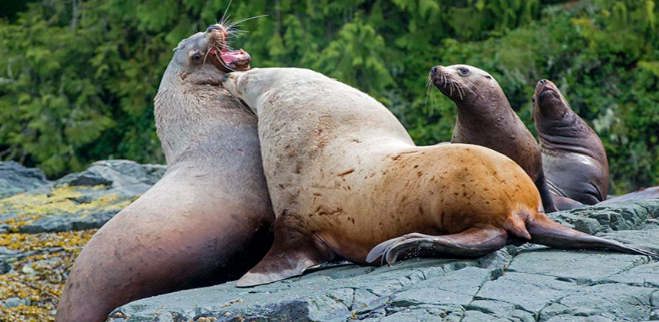
B.C. salmon farms use layered prevention systems to protect marine wildlife while producing affordable, sustainable protein for Canadians.
References
B.C. Salmon Farmers Association. "Modern Salmon Farming in British Columbia: A Review." Chapter 9: Wildlife Interactions. Prepared by the B.C. Centre for Aquatic Health Sciences. 2024.
B.C. Salmon Farmers Association. "Wildlife Interactions FAQ." 2024.
DFO Open Data. Marine Finfish Aquaculture Wildlife Interactions. Government of Canada.
Frequently asked
How many marine mammals have been killed at BC salmon farms?
From 2011 to 2022, there were 431 megafauna mortalities at salmon farms across British Columbia. 98% were California sea lions and harbour seals. Zero sharks, turtles, otters, porpoises, dolphins, or orcas were killed. Annual mortalities dropped from 304 in 2011 to an average of 10 per year from 2013 to 2022.
What is the salmon farming industry's no-kill policy?
In 2012, BC salmon farmers voluntarily implemented a sector-wide no-kill policy for seals and sea lions, four years before DFO formally prohibited authorized euthanasia in 2016. The policy led to dramatic reductions in marine mammal mortalities at farm sites.
Have any whales been killed at BC salmon farms?
From 2008 to 2022, eight humpback whales became entangled at or near salmon farm infrastructure. Five were released unharmed and three did not survive. These entanglements accounted for less than six per cent of all humpback whale entanglements in BC. No orcas, dolphins, or porpoises have been killed at BC salmon farms.
Coalition of First Nations for Finfish Stewardship