
Every Salmon Farm in B.C. Would Fit Inside Stanley Park. The 2029 Trudeau-era Ban Says They're the Problem.
Wild salmon are strained by lost freshwater habitat, water extraction, and development, not by marine farms that take up less space than Stanley Park. The federal government's 2029 salmon farming ban misses the cause.
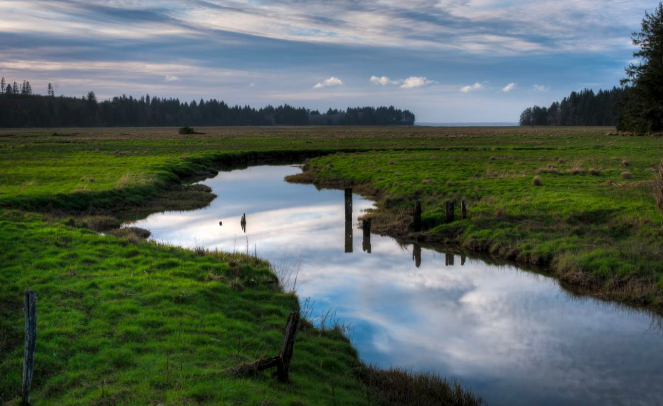
If you want to help wild Pacific salmon, it helps to know the factors actually working against them. Along the B.C. coast the real pressures are well documented, and they build up in the rivers, estuaries, and watersheds where salmon are born and spend their early lives. A net pen anchored in deep marine water is not on that list.
The pressure starts on land
Wild salmon spend part of their lives in freshwater and part in the ocean, and their freshwater habitat has taken a century of hard use. In 1900, British Columbia had fewer than 200,000 people. By 1951 it was about 1.2 million. As of 2021 it was more than 5.2 million, and most of those people live along the coastline and in the watersheds that salmon depend on. Some projections have the Pacific Northwest population of Canada and the U.S. growing from 14 million to 85 million by 2100. Every one of those people needs land, water, and infrastructure, and salmon habitat sits in the way of a lot of it.
Land development tells the story plainly. The Fraser River watershed, greater Vancouver, and the east coast of southern Vancouver Island have absorbed the bulk of B.C.'s development over the past century. Using 170-year-old survey field manuals, scientists concluded that 85% of the lower Fraser River's salmon habitat, from Delta to Hope, is no longer accessible to already-declining fish populations. Estuaries, which are critical nurseries for juvenile salmon leaving their home streams, have been dredged, diked, and smothered by debris.
Forestry adds another layer. Removing trees changes how water moves through a watershed, producing higher flood flows in the wet season and lower flows in the dry season, more erosion and sediment in the water, and warmer stream temperatures where shade is lost. Water extraction compounds it. Pulling water from streams and aquifers for homes, industry, and agriculture, during years of drought and thin snowpack, can leave too little behind for juveniles and returning spawners, and what remains runs warmer than salmon can comfortably handle.
Why a marine farm is not in this picture
This is the piece that usually goes missing in the debate. Salmon farms are anchored in marine waters typically more than 40 metres deep. They have no way to affect the estuarine and freshwater habitat where these pressures actually land. A farm touches the shoreline only through anchor pins that hold the cages in place, and those do not block passage for fish, birds, or other marine life. The physical footprint is genuinely small: the average cage array and grid is about four hectares, and all of B.C.'s salmon farms together occupy less space than Stanley Park in Vancouver.
So when a policy shuts down marine salmon farming in the name of protecting wild salmon, it is acting a long way from the freshwater habitat loss, water extraction, and development that the science identifies as the real strain.
The sector is already part of the solution
Salmon farmers are not spectators to wild salmon conservation. Because they have expertise in salmon and oceanography and a year-round presence in coastal waters, they are unusually well placed to help, and they have been doing it for years alongside First Nations, DFO, the scientific community, and coastal communities.
The work is concrete. Salmon farmers have funded and supported the Discovery Passage plankton monitoring program near Campbell River, which helped match hatchery salmon releases with the food actually available in the ocean, a collaboration that included the A-Tlegay Fisheries Society, the local aquatic health science centre, the Campbell River Salmon Foundation, and DFO's Quinsam River Hatchery. Farmers use GIS mapping to build datasets on salmon runs, migration routes, and stream conditions across the areas where they operate, exactly the kind of information DFO's Wild Salmon Policy needs to guide restoration. And they have backed estuary and eelgrass restoration in places such as Klemtu and Sechelt, work that rebuilds nursery habitat, stabilizes shorelines, cleans water, and stores carbon.
First Nations sit at the centre of all of it. As the original stewards of the coast, they connect these efforts through their own governance, Guardian Watchmen and stewardship programs, traditional knowledge paired with Western science, and watershed restoration. Coastal First Nations have managed these waters for thousands of years, and they are leading the effort to give wild salmon their best chance against climate change and human pressure.
Feeding people without adding pressure
There is one more piece. A growing population needs protein, and if that demand falls on wild capture fisheries it adds pressure salmon populations cannot absorb. Farm-raised salmon feeds that demand without taking a single fish out of the wild run. That is the quiet logic of the whole sector: it grows food on a small marine footprint so the wild fishery does not have to carry the load.
The Trudeau-era 2029 net-pen ban does not touch the land-based pressures that are actually straining wild salmon. It removes a food source that takes weight off the wild fishery, and it sidelines partners who are funding the science and restoration the situation calls for. Reversing it keeps both the food and the stewardship in Canadian hands.
References
- BC Salmon Farmers Association. 2024. Caring for Wild Salmon: The Local Picture. In: Modern Salmon Farming in BC: A Review. Chapter 3.
- Finn RJR, et al. 2021. Quantifying lost and inaccessible habitat for Pacific salmon in Canada's Lower Fraser River. Ecosphere 12(7).
- Fisheries and Oceans Canada. Canada's Policy for the Conservation of Wild Pacific Salmon (Wild Salmon Policy), 2005.
- Centre for Aquatic Health Sciences. Discovery Passage Plankton Monitoring Program.
Frequently asked
What is putting the most pressure on wild salmon in B.C.?
The documented pressures build up in freshwater: a century of land development, lost and inaccessible habitat, forestry effects on watersheds, and water extraction during drought. Scientists found 85% of the lower Fraser River's salmon habitat is no longer accessible to declining fish populations.
How much space do B.C. salmon farms actually take up?
The average cage array and grid is about four hectares, and all of B.C.'s salmon farms together occupy less space than Stanley Park in Vancouver. They are anchored in marine waters typically more than 40 metres deep, away from freshwater habitat.
Do salmon farmers help wild salmon?
Yes. They have funded plankton monitoring near Campbell River, used GIS mapping to build datasets on salmon runs and migration routes, and backed estuary and eelgrass restoration at Klemtu and Sechelt, working alongside First Nations, DFO, and coastal communities.
Coalition of First Nations for Finfish Stewardship