
Where Does Your Salmon Come From Today? (And Where Will It Come From After 2029?)
The federal government's 2029 salmon farming ban would shut down 56,000 tonnes of Canadian production and replace it with imports from Norway, Chile, and Scotland.
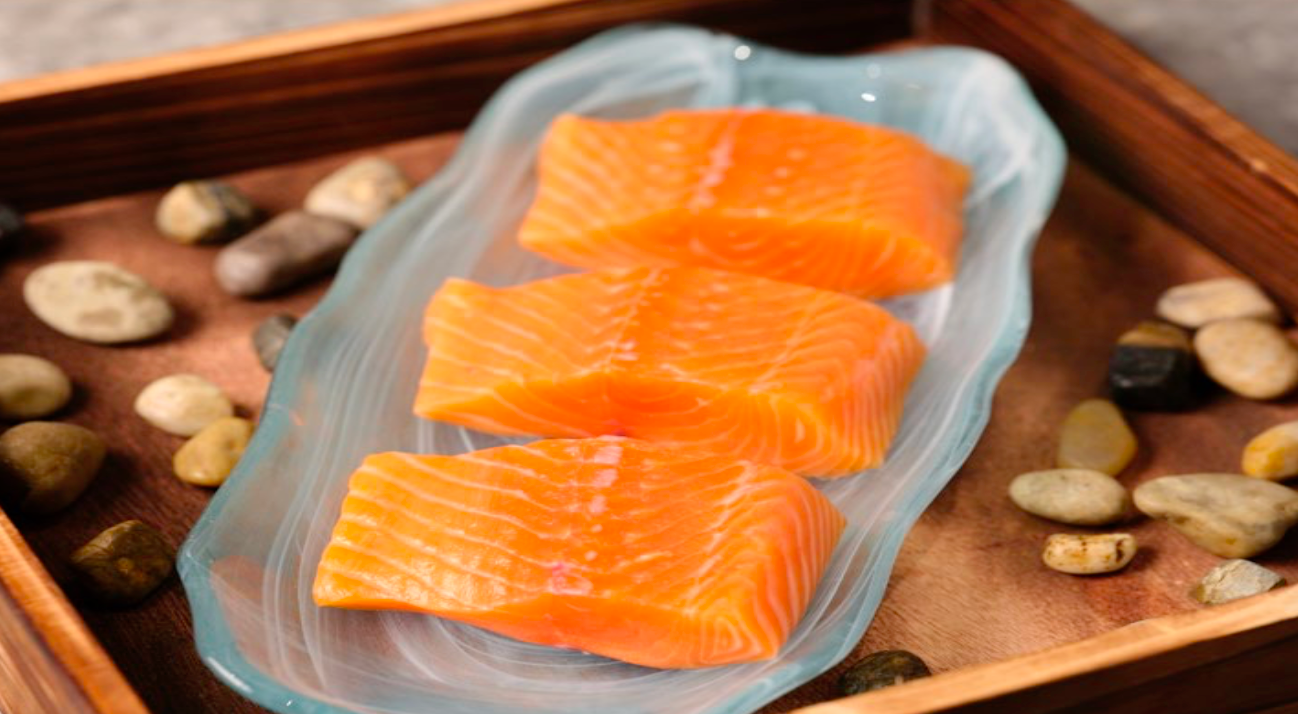
Next time you're at the grocery store, pick up a piece of fresh salmon and look at the label. If it says "Product of Canada," there's an 85% chance it was raised on a farm somewhere along B.C.'s coast from Tofino to the central coast near Klemtu. It was grown in Canadian waters, fed with feed made in B.C. using raw ingredients sourced largely from North America, processed in a Canadian plant under some of the strictest food safety rules on the planet, and driven to your store.
Now imagine that label disappearing.
The federal government's 2029 salmon farming ban would shut down an industry that produces roughly 56,000 tonnes of salmon a year. That is 380 million meals worth of Canadian protein. When it's gone from Canadian production, Canadians won't stop eating salmon. They'll just eat salmon imported from somewhere else.
The replacement fish
Canada already imports over $700 million in farmed salmon annually, from Norway, Chile, and Scotland. If the ban holds, that number climbs substantially. Every kilogram of salmon that used to come from a farm off Vancouver Island or the central B.C. coast will instead arrive on a cargo plane from the other side of the world.
Norway is roughly 7,500 kilometres from Vancouver. Chile is about 11,000 kilometres. Scotland, around 7,300. That salmon flies in refrigerated cargo, burns jet fuel, and arrives in your grocery store priced however the exporting country sees fit. Canadians don't set the price. They pay it.
And here's what most people don't think about: Canadian-made salmon feed already has a lower carbon footprint than feed produced in Norway or Chile, in part because ingredients are sourced locally. Replacing B.C.-grown salmon with imported fish doesn't just cost more at the grocery store. It adds thousands of air-freight kilometres to every fillet, increasing the environmental footprint of the food Canadians eat.
What you get with Canadian-farmed salmon
Every farm-raised salmon sold in Canada goes through a food safety system that most consumers never hear about. All products are processed in licensed, inspected facilities following HACCP principles. Fish are tested for heavy metals, pesticides, herbicides, antibiotics, polyaromatic hydrocarbons, dyes, dioxins, and furans.
The Canadian Food Inspection Agency and Health Canada control what veterinary drugs can be used. In B.C., only four antimicrobials are licensed for salmon farming, and their use has decreased dramatically over the past two decades. All antimicrobial use must be reported to DFO, and residue testing happens at every processing plant. Withdrawal periods are set by Health Canada and monitored in muscle and skin tissue. If residue limits are exceeded, the product does not enter the food chain.
On top of the regulatory baseline, all Atlantic salmon farms in B.C. hold Best Aquaculture Practices certification, and many are also Aquaculture Stewardship Council certified. Both certification bodies add their own layers of food safety auditing.
That is the standard Canadian consumers get today. It is transparent, it is public, and it is enforced.
What you get with imported salmon
Imported salmon is subject to Canadian border inspection, but the day-to-day production standards, environmental monitoring, veterinary oversight, and reporting transparency depend on the exporting country's regulatory framework. Canada does not set the rules for how Norwegian, Chilean, or Scottish farms operate. Canada does not audit those farms. Canada does not monitor the waters they sit in.
That doesn't mean imported salmon is unsafe. The major producing countries have their own regulatory systems. But a Canadian consumer buying imported salmon has less visibility into how it was raised, what it was treated with, what monitoring was done, and under whose oversight. The supply chain gets longer and less transparent at every step.
As a country that values food transparency and consumer protection, Canada is better served by growing more of its own food under its own rules. The Trudeau-era 2029 salmon farming ban moves Canada away from that goal.
The feed story most people miss
B.C. salmon feed is made locally in Surrey and Vancouver. About 80% of raw ingredients come from Canada and the US. Feed companies operating in B.C. ranked first and second on the Coller FAIRR Protein Producer Index in 2021, outperforming 60 of the world's largest protein producers on sustainability metrics including deforestation, biodiversity, and antibiotic use.
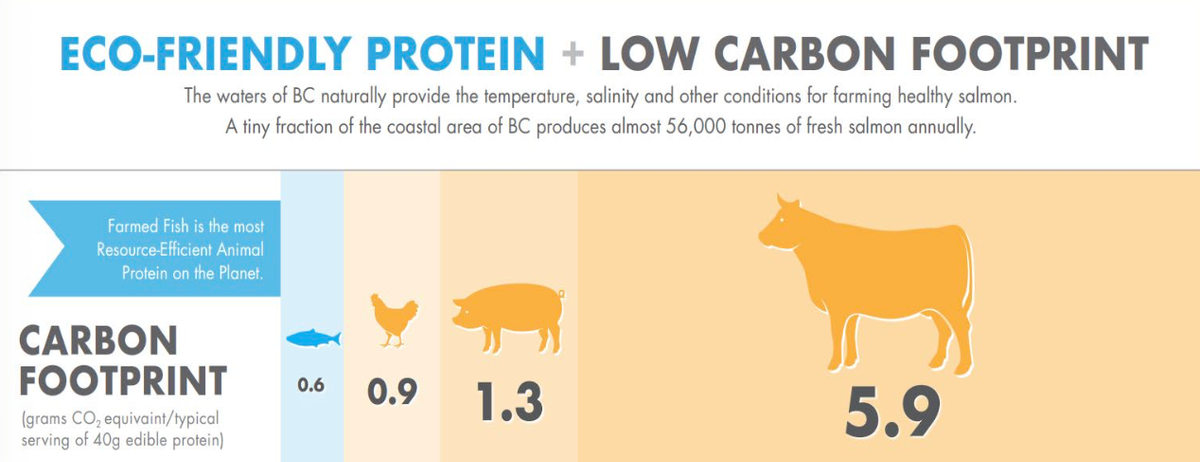
The feed conversion ratio for B.C. farmed salmon is about 1.15 to 1.2 kilograms of feed per kilogram of fish. That is more efficient than chicken, substantially better than pork, and a fraction of what beef requires. And farmed salmon has the lowest average carbon footprint per 40-gram serving among all the major animal proteins.
All of that production infrastructure, those supply chains, those jobs at feed plants and processing facilities. It all stays in Canada as long as Canada keeps farming salmon. The moment the ban takes effect, that economic activity moves offshore with the fish.
The question at the grocery store
This comes down to a pretty simple choice. Canada can keep growing its own salmon: in its own waters, under its own food safety standards, with feed made in its own facilities, processed in its own plants, by Canadian workers, including hundreds of Indigenous employees in coastal communities. Or Canada can import the same fish from Norway, Chile, and Scotland, raised under someone else's rules, processed elsewhere, and sold at whatever price the exporter decides.
Canadian food, grown in Canadian waters, by Canadians. Or imported fish, priced by someone else, flown across an ocean, governed by someone else's standards.
The federal government's 2029 salmon farming ban makes that choice for you. It picks the second option. And it does it in the middle of an affordability crisis, at a time when the same government says it wants to build a stronger, more self-reliant Canada.
Canada should not outsource its food future.
References
Modern Salmon Farming in B.C.: A Review - Chapter 1, Caring for Coastal B.C. (2024). Commissioned by the B.C. Salmon Farmers Association.
Modern Salmon Farming in B.C.: A Review - Chapter 7, Feed Sustainability (2024). Commissioned by the B.C. Salmon Farmers Association.
Modern Salmon Farming in B.C.: A Review - Chapter 12, Food Safety (2024). Commissioned by the B.C. Salmon Farmers Association.
B.C. Salmon Farmers Association. Economic Impacts FAQ (2024).
Frequently asked
Where does most of Canada's salmon come from?
85% of salmon harvested in British Columbia comes from farms along the B.C. coast, producing roughly 56,000 tonnes annually.
What happens to Canadian salmon supply if the 2029 ban goes ahead?
Canada would need to replace domestic production with imported salmon from Norway, Chile, and Scotland, increasing costs and reducing supply chain transparency.
How does Canadian farmed salmon compare to imports on food safety?
Canadian farmed salmon is processed in licensed facilities, tested for heavy metals, pesticides, antibiotics, and other compounds, and subject to Health Canada oversight. Imported salmon depends on the exporting country's regulatory framework.
Coalition of First Nations for Finfish Stewardship