
Seven Safeguards: How Salmon Farmers Actually Manage Fish Health
B.C. salmon farms use seven layers of prevention and monitoring. Reversing the federal government's salmon farming ban keeps this system protecting wild and farmed fish.
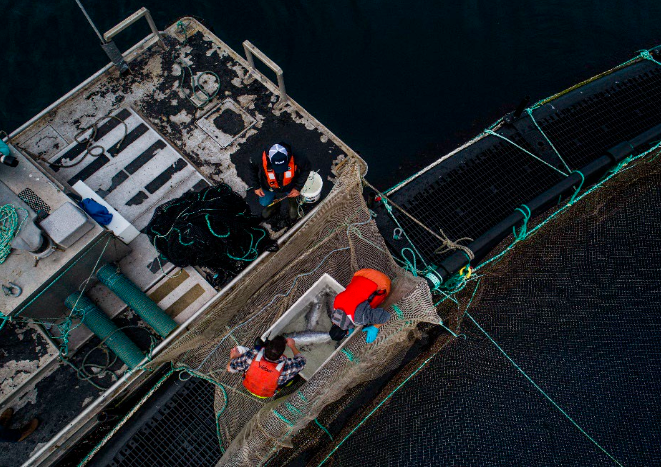
If you listen to the loudest voices in the salmon farming debate, you would think B.C.'s farms are unregulated operations dumping disease into the ocean. The reality is closer to the opposite. Over the past 40 years, licensed veterinarians and fish health teams have built a layered system of prevention, monitoring, and response that keeps farm-raised salmon healthy and minimizes any risk to wild fish.
Only about 3% of B.C. farm-raised salmon die from infectious disease each year. The remaining 97% are never even infected by the pathogens that cause those deaths, despite living in the same pens every day.
That number did not happen by accident. It is the result of seven distinct safeguards that protect both farmed and wild fish throughout the production cycle.
The Seven Safeguards
Safeguard 1: Selective Breeding. Fish health starts before a salmon ever touches seawater. Broodstock programs select parent fish using modern genetic technologies, choosing individuals with strong immune systems, disease resistance, and stress tolerance. No eggs or breeding stock have been imported into Canada since 2012. Every fish comes from domestic B.C. broodstock programs that have been refined over multiple generations.
Safeguard 2: Pathogen Prevention in Hatcheries. Most hatcheries are closed containment, land-based systems using groundwater that has never contained wild fish. Eggs are screened for pathogens during spawning, and lots that do not meet strict standards are destroyed. Before smolts leave the hatchery, they are vaccinated against major pathogens, including IHN virus, furunculosis, vibriosis, and bacterial kidney disease.
Safeguard 3: Transfer Controls. No fish move from the hatchery to the ocean without approval from the federal and provincial governments. The B.C. Introductions and Transfers Committee reviews health data and lab reports before any transfer is authorized. If mortality exceeds 0.05% for four consecutive days in the 30 days before transfer, the regulator must be notified and may block the move. Marine sites are thoroughly cleaned, disinfected, and fallowed between production cycles.
Safeguard 4: Biosecurity at Marine Sites. Once fish are at sea, strict biosecurity measures prevent the spread of pathogens within and between sites. Equipment is dedicated to each site. Staff follow disinfection protocols. Nets are cleaned every 10 to 14 days and inspected by divers, cameras, and remotely operated underwater vehicles. Water quality, temperature, and oxygen levels are monitored continuously. Some sites collect several hundred thousand data points daily.
Safeguard 5: Veterinary Treatment. Licensed veterinarians determine if and when treatment is needed. Integrated pest management coordinates timing and methods across all farms in a region, regardless of ownership, to minimize resistance and maximize effectiveness. Antibiotic use on B.C. salmon farms has decreased by about 80% over the past 28 years, largely because of effective vaccines and improved husbandry practices.
Safeguard 6: Monitoring and Record Keeping. Fish health teams maintain records of surveillance, diagnostics, medicine use, mortality by pen, biosecurity actions, growth rates, feed composition, and environmental conditions. Video clips of any abnormal behaviour are sent to veterinarians and management. Each company's Fish Health Management Plan is reviewed annually and updated continuously.
Safeguard 7: Regulatory Compliance and Verification. Salmon aquaculture is the only commercial animal farming in Canada where all health events, mortality events, and veterinary treatments must be reported to federal regulators. DFO audits approximately 18 randomly selected farms every quarter. First Nations partners conduct additional oversight through collaborative agreements. Third-party certification bodies like the Aquaculture Stewardship Council add another layer of independent review. On some farms, that means a triple on-site review of veterinary practices.
What the Numbers Say
The results of this system are tracked in publicly reported data to DFO. From 2016 to 2022, each B.C. salmon farm reported about one Fish Health Event per year on average. From 2011 to 2022, each farm averaged about one Mortality Event per year, and only 4.1% of those involved infectious diseases.
The DFO Fish Health Audit Program provides independent verification. Government biologists sample dying and recently dead fish at randomly selected farms, focusing specifically on fish that died from non-obvious causes, such as algal blooms or mechanical injury. This audit program has been running since the early 2000s. Nowhere else in the world is a livestock sector subject to this level of government auditing and public reporting.
Nine formal risk assessments by the Canadian Science Advisory Secretariat examined whether pathogens from farmed salmon pose a threat to wild Fraser River sockeye. In every case, the conclusion was the same: minimal risk.
Technology Is Accelerating
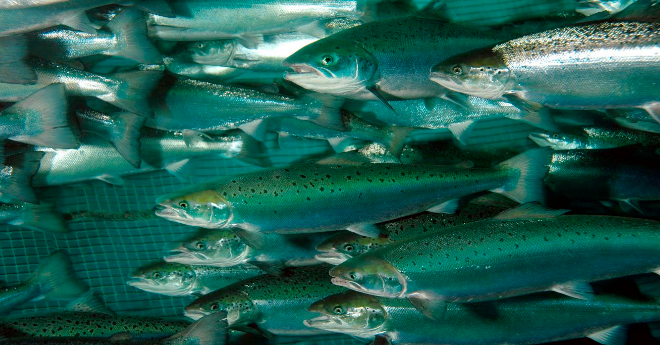
The digital side of fish health management is changing fast. High-speed internet in remote areas has enabled real-time monitoring from every pen. Some farms capture up to 150,000 underwater camera images per day. Artificial intelligence programs are being developed to evaluate fish health status by analyzing camera data, water quality readings, and behavioural patterns together.
For veterinarians managing farms spread over 400 kilometres of coastline, this technology means they can monitor sites remotely, receive near real-time alerts about abnormal conditions, and respond to early signs of disease before they become outbreaks.
Government agencies like DFO and Environment Canada use some of the farms' infrastructure and weather instrumentation to collect data for their own forecasts. Several sites serve as coastal zooplankton reference monitoring stations. The data sets generated by this equipment are being shared with universities for collaborative research projects.
Why Reversing the Ban Strengthens Wild Salmon Protection
Reversing the Trudeau-era 2029 net-pen ban would preserve one of the most closely monitored and transparent food production systems in the country. The fish health infrastructure described here took four decades to build. It protects both farmed and wild salmon. It generates data that benefits marine science broadly.
Keeping this system in place means keeping the monitoring, the veterinary oversight, the data collection, and the industry-funded research that currently supports wild salmon conservation on the B.C. coast.
Reversing the federal government's 2029 salmon farming ban is a practical step that strengthens environmental stewardship, protects the science that informs wild salmon conservation, and keeps a proven food safety system working for Canadians.
References
B.C. Salmon Farmers Association. 2024. "Caring for Fish Health" in Modern Salmon Farming in B.C.: A Review. Chapter 11. B.C. Salmon Farmers Association, Campbell River, British Columbia. 95 pages.
DFO Open Data. Results of DFO fish health audits of British Columbian marine finfish aquaculture sites, by facility. Government of Canada.
DFO Open Data. Carcass classification of cultured salmon at British Columbian aquaculture sites by facility. Government of Canada.
Canadian Science Advisory Secretariat. 2017-2020. Risk assessments of nine salmonid pathogens. Fisheries and Oceans Canada.
Cohen Commission of Inquiry into the Decline of Sockeye Salmon in the Fraser River. Final Report, Volume 3. 2012.
Frequently asked
How healthy are farm-raised salmon in B.C.?
About 97% of B.C. farm-raised salmon survive each year without ever being infected by the pathogens that cause infectious disease. Only about 3% die from infectious disease annually.
What safeguards protect wild salmon from farm-raised fish diseases?
Seven safeguards protect wild fish: selective breeding, pathogen prevention in hatcheries, transfer controls, marine site biosecurity, veterinary treatment, monitoring and record keeping, and regulatory compliance with independent government audits.
Do salmon farms pose a disease risk to wild salmon?
Nine formal risk assessments by the Canadian Science Advisory Secretariat examined whether pathogens from farmed salmon threaten wild Fraser River sockeye. In every case, the conclusion was minimal risk.
Coalition of First Nations for Finfish Stewardship