
Sea Lice and Salmon: What the Science Actually Says
Over 320,000 wild salmon examined. The data on sea lice tells a clear story. Reversing the federal government's salmon farming ban protects the science.
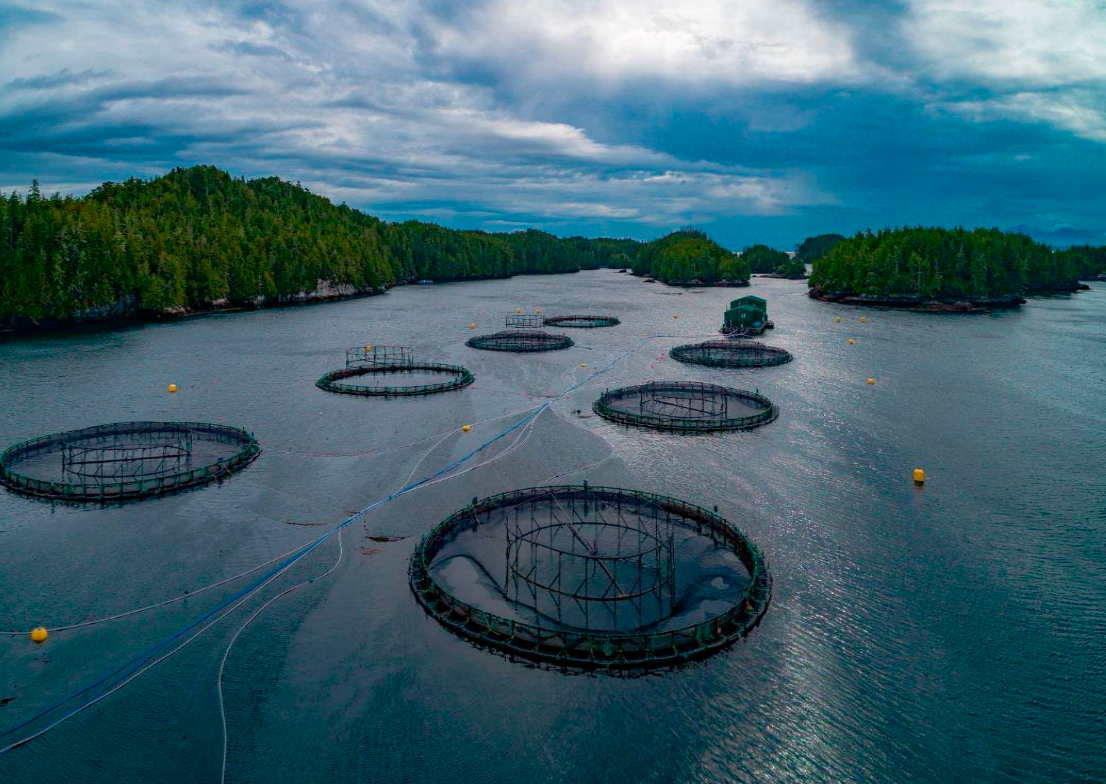
If you've ever read a headline about salmon farming in B.C., you've probably come across sea lice. They're the single most cited concern people raise when the conversation turns to farmed salmon, and they've been used to justify everything from boycotts to the Trudeau-era 2029 net-pen ban.
So what does the actual data say?
Researchers, First Nations oversight bodies, DFO scientists, NGOs, and independent third-party biologists have examined more than 320,000 juvenile wild salmon for sea lice across every salmon farming region in B.C.. That combined dataset, collected over two decades of monitoring, tells a clear story.
Among pink salmon larger than 0.7 grams, the threshold where the fish become resilient enough to actively shed lice, 99% had no adult salmon lice at all.
Sea lice are natural residents of B.C. waters
Sea lice evolved alongside Pacific salmon long before there was a single farm pen on the coast. Kwak'wala-speaking peoples call them ḵa̱t̕a̱'yat'si. In Haida, they're called daaga. Two main species exist in B.C.: the salmon louse and the herring louse, which infest at least 12 other fish species besides herring.
Every species of wild Pacific salmon carries sea lice naturally. Adult pink salmon returning to spawn can carry more than 50 lice per fish. Adult chum salmon carry anywhere from two to 43. In areas with no salmon farms at all, like the Skeena watershed, roughly 10 to 23% of juvenile wild salmon carry one or more lice. South of the Campbell River region, background levels on juvenile pink salmon ranged from 19 to 33% across years of monitoring.
Those numbers matter because they establish the baseline. Sea lice exist in every coastal region of B.C., regardless of whether farms are present.
How farmers actually manage sea lice
Farm-raised salmon enter the ocean completely free of sea lice. Every single fish starts clean. The management system that keeps lice levels low on farms is built around Integrated Pest Management (IPM) and operates in layers.
Prevention comes first. Companies have invested heavily in land-based hatchery systems that grow juvenile salmon to larger sizes before they ever reach saltwater, cutting the time fish spend exposed to lice in the ocean. Selective breeding programs produce fish that grow faster and spend less time at marine sites. Physical barriers, such as aeration diffusers and bubble curtains, prevent lice from entering pens. Some farms use submerged feeding technology that keeps salmon below the water depths where lice concentrate.
Monitoring is constant and mandatory. Farmers conduct regular sea lice counts. DFO, First Nations oversight bodies, and veterinarians all receive reports. In 2003, B.C. established a precautionary treatment threshold of three motile salmon lice per fish during the spring wild salmon out-migration window. At the time, that threshold was twice as strict as Norway's. It has been in place for over 20 years.
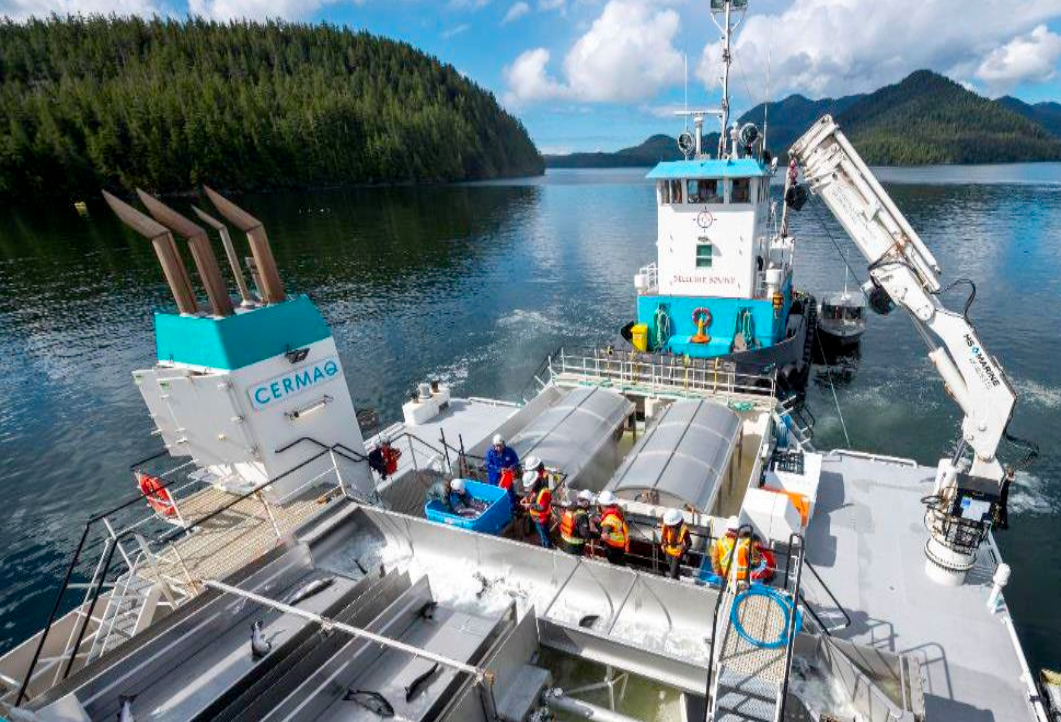
When treatment is needed, veterinarians rotate among multiple methods: prescribed in-feed treatments, freshwater baths, hydrogen peroxide, and mechanical delousing with low-pressure seawater. Effluent water from every treatment is filtered to collect the removed lice, which are disposed of on land. The rotation prevents resistance. Third-party lab testing confirms that treatment methods remain effective.
The results speak for themselves. With very few exceptions, farmers have successfully kept sea lice populations below the regulatory management threshold during the spring out-migration period when juvenile wild salmon are most vulnerable.
The population-level question
The larger question people ask is whether sea lice from farms have driven declines in wild salmon populations. The Broughton Archipelago has been the most intensively studied region in B.C., with hundreds of researchers and tens of millions of dollars invested there.
In 2010, salmon farmers, DFO, the David Suzuki Foundation, Watershed Watch, Georgia Strait Alliance, Living Oceans Society, and academic researchers formed a joint monitoring program. What they found was significant: sea lice treatments at farms prior to wild salmon out-migration successfully reduced infestations on juvenile pink salmon.
Chum salmon, which are more susceptible to sea lice than pink salmon, showed no evidence of population-level decline related to sea lice. That finding held true even during the years of the highest lice numbers ever reported in the Broughton Archipelago.
The Fraser River supports the largest pink salmon population in the northeast Pacific south of Alaska. Large pink salmon returns have occurred more often during the salmon farming years than in years before farms were present. Similar patterns hold for Fraser River sockeye.
Since the removal of farms from the Broughton Archipelago began in 2019, sea lice levels on wild pink and chum salmon actually increased from 2020 to 2022 before declining in 2023 to levels reported a decade earlier. That pattern suggests that since the mid-2000s, wild salmon sea lice infestations have been mostly independent of farm operations.
A 2023 Canadian Science Advisory Secretariat review supported this conclusion.
Reversing the ban protects the science and management that work
Twenty years of data, collected by farmers, First Nations, government researchers, and environmental groups working together, have built one of the strongest sea lice management systems in the world. Reversing the Trudeau-era 2029 net-pen ban keeps that system in place.
It preserves the monitoring infrastructure that tracks sea lice on wild salmon across every farming region in B.C. It maintains the coordinated treatment programs and voluntary industry agreements that keep lice levels below regulatory thresholds during the most sensitive migration periods. It protects the funding that salmon farmers contribute towards independent research and wild salmon science.
Sea lice will continue to exist on wild salmon with or without farms. They have for millennia. Keeping B.C.'s salmon farming sector operational means Canada retains the management tools, scientific expertise, and monitoring programs that minimize sea lice impacts on wild populations. It means the collaboration between industry, First Nations, and researchers continues to strengthen.
The science on sea lice in B.C. is stronger than it has ever been. Reversing the ban is one practical step the federal government can take to protect it.
References
B.C. Salmon Farmers Association. 2024. "Caring for Wild Salmon: Sea Lice Management." In Modern Salmon Farming in B.C.: A Review. Campbell River, British Columbia. 73 pages.
B.C. Salmon Farmers Association. 2024. "Sea Lice: Frequently Asked Questions." BCSFA, Campbell River, British Columbia.
DFO Open Canada Dataset. Sea lice counts and treatments at B.C. Atlantic salmon farms. Government of Canada.
Broughton Archipelago Monitoring Plan (BAMP). Joint research program: DFO, David Suzuki Foundation, Watershed Watch, Georgia Strait Alliance, Living Oceans Society, academic researchers, and salmon farming companies.
Canadian Science Advisory Secretariat. 2023. Science advisory review of sea lice and farm-wild salmon interactions in British Columbia.
Frequently asked
Do sea lice from salmon farms harm wild salmon?
Over two decades of monitoring more than 320,000 juvenile wild salmon, 99% of pink salmon larger than 0.7 grams had no adult salmon lice. Sea lice management at farms has been effective at protecting wild salmon during migration.
Are sea lice natural in B.C. waters?
Yes. Sea lice evolved alongside Pacific salmon and are found on all wild Pacific salmon species. In areas with no salmon farms, 10 to 23% of juvenile wild salmon naturally carry sea lice.
How do salmon farmers manage sea lice?
Farmers use Integrated Pest Management including prevention technology, mandatory monitoring, and rotating treatment methods. B.C.'s regulatory threshold has been in place for over 20 years and was twice as strict as Norway's when introduced.
Coalition of First Nations for Finfish Stewardship