
How Salmon Farmers Support the Waters They Work In
Every active salmon farm in B.C. is also a daily ocean-monitoring station. The federal government's 2029 salmon farming ban removes conservation infrastructure the coast cannot easily replace.
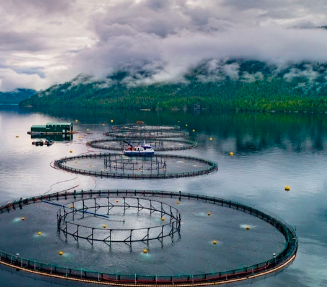
Every active salmon farm in B.C. takes plankton samples daily, and has done for at least two decades. Add the in-sea sensors now running at most sites, the wireless data towers connecting them, and the AI systems sorting the output, and a working salmon farm generates millions of data points a day on temperature, oxygen, salinity, currents, and the state of the food web that wild salmon depend on.
That is what tends to get lost in the conversation about the federal government's 2029 salmon farming ban. The argument is usually framed around fish in pens. It rarely accounts for what the people running those pens contribute to the coast outside them.
A presence the coast does not have anywhere else
The B.C. coast is enormous, remote, and expensive to monitor. DFO does what they can. Coastal First Nations and their Guardian Watchmen lead extraordinary stewardship work in their territories. Volunteer streamkeepers and conservation societies cover ground that nobody else does. Salmon farmers add something different again: a daily, year-round presence at fixed locations across hundreds of kilometres of coastline, with the technical equipment to measure ocean conditions in real time.
That presence is the reason the sector has been pulled into so many conservation projects over the past two decades, and it is the reason the data those projects rely on would be difficult to replace.
Funding the science of the open ocean
The Pacific Ocean, where wild salmon spend most of their lives, is still largely a mystery to researchers. The International Year of the Salmon initiative is one of the most ambitious efforts to change that, with scientists from Canada, Japan, Korea, Russia, and the United States working together to map salmon distribution across the North Pacific in winter and identify what governs their survival.
The BC Salmon Farmers Association has been a major funder of that work, including the high-seas winter expeditions. The findings feed back into how Canadian science understands climate-driven changes to salmon ocean habitat, such as warming and declining zooplankton in the Strait of Georgia, which is now 1.5°C warmer than it was sixty years ago.
Monitoring closer to home
Local ocean conditions matter just as much. A multi-year plankton monitoring program in the Campbell River region is a good example of what farmer presence enables. It paired daily plankton data from salmon farms with hatchery release timing for Quinsam River coho, helping match juvenile releases to peak food availability in the ocean. The partners on the project include the A-Tlegay Fisheries Society, the BC Centre for Aquatic Health Sciences, the Campbell River Salmon Foundation, and the DFO Quinsam River Hatchery, with funding support from salmon farmers.
The model is straightforward. The farms are already there, the equipment is already collecting, and the data can be shared with the people working to recover wild stocks. Farmers do not have to invent a monitoring network. They are running one.
Mapping watersheds, runs, and out-migration routes
The sector also maintains GIS layers covering farm locations, stream locations and salmon returns, juvenile out-migration routes, and other industrial activity such as forest harvesting. These are the building blocks for understanding how habitat has changed over time and where wild salmon move when they leave their natal streams.
Juvenile out-migration route maps for several production areas have been built directly on knowledge shared by coastal First Nations whose stewardship of those waters predates the sector by thousands of years. The result is a working dataset that exists nowhere else.
Restoring estuaries, supporting hatcheries
The contribution does not stop at data. Salmon farmers have supported eelgrass restoration in Klemtu and Sechelt, work that protects critical juvenile salmon habitat and stabilizes shorelines. Veterinarians and fish health teams from farming companies have donated time and expertise to community-led enhancement projects throughout coastal B.C. "Hatchery-in-a-box" units have been delivered to remote Indigenous communities running their own salmon recovery programs.
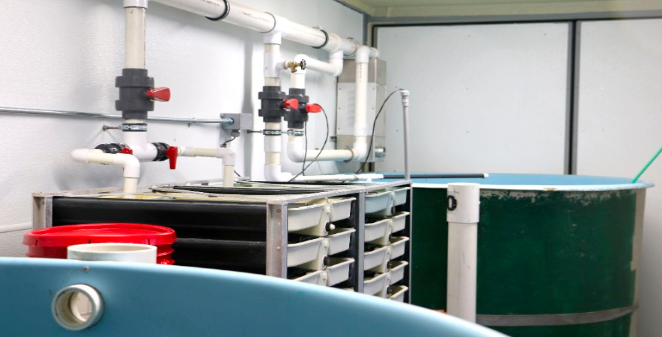
The Marble River Chinook hatchery shows what this kind of support can build over time. After roughly four decades of work, the run has climbed from about 500 spawners to between 5,000 and 7,000 fish a year, supported by more than 100 volunteers, local businesses, and a sea pen donated by salmon farmers that holds smolts for their first month at sea. Early marine survival has improved by about 3% as a result.
What the Trudeau-era ban actually removes
The 2029 net-pen ban is usually debated in narrow terms: fish, farms, jobs. The quieter loss is the monitoring and conservation infrastructure that goes with the sector. The daily plankton sampling, the open-ocean research funding, the GIS layers, the community hatchery partnerships, the eelgrass restoration, the donated equipment, the staff hours from people who spend their working lives on the water. None of it is mandated. All of it is voluntary. All of it disappears if the farms do.
Reversing the ban keeps that capability on the coast. It also keeps the people who do the work where they need to be: on the water, year-round, with the gear and the partnerships already in place.
The coast needs more eyes, not fewer.
References
- BC Salmon Farmers Association. Caring for Wild Salmon: The Local Picture, in Modern Salmon Farming in BC: A Review. Campbell River, B.C., 2024. www.bcsalmonfarmers.ca
- Centre for Aquatic Health Sciences. Plankton Monitoring Program, Campbell River. 2019. www.cahs-bc.ca
- International Year of the Salmon. yearofthesalmon.org
- Fisheries and Oceans Canada. Canada's Policy for the Conservation of Wild Pacific Salmon, 2005.
- Pacific Salmon Foundation. State of Pacific Salmon. psf.ca
- Beamish, R. The need to see a bigger picture to understand the ups and downs of Pacific salmon abundances. ICES Journal of Marine Science 79(4), 2022.
Frequently asked
Do salmon farms in B.C. contribute to wild salmon conservation?
Yes. B.C. salmon farmers fund Pacific salmon research, collect daily oceanographic data at every active farm, maintain GIS layers covering salmon returns and out-migration routes, and support community-led hatcheries throughout coastal B.C.
What kind of ocean data do salmon farms collect?
Active farms collect millions of data points each day on temperature, oxygen, salinity, currents, and plankton conditions through in-sea sensors, wireless towers, and AI-driven systems. Daily plankton sampling has been standard practice at every active farm for at least two decades.
Will the 2029 salmon farming ban affect wild salmon conservation work?
Yes. The daily ocean monitoring, open-ocean research funding, GIS mapping, community hatchery partnerships, and eelgrass restoration that salmon farmers contribute to coastal B.C. are all voluntary. That infrastructure ends if the farms close.
Coalition of First Nations for Finfish Stewardship