
B.C. Salmon Farming - The Precision Ocean Technology Already on the Water
B.C. salmon farms run on sensors, cameras and AI that generate millions of data points a day. The federal government's 2029 salmon farming ban would shut down the ocean-tech platform Canada says it wants to grow.
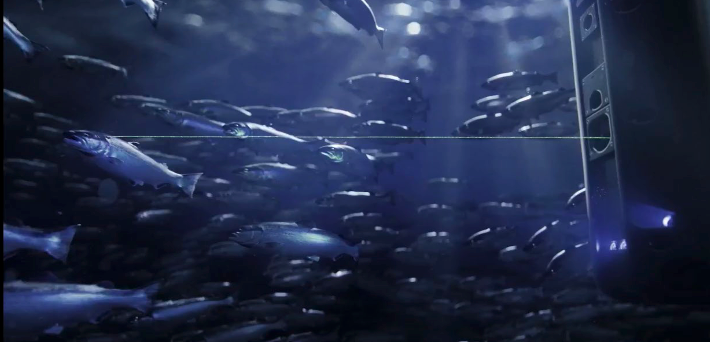
Salmon farming on the B.C. coast is one of the most technologically advanced food production sectors in Canada. Sensors, cameras, machine learning, and real-time data infrastructure are standard equipment across operating sites, generating millions of data points every day about ocean conditions, fish behaviour, and farm performance. The Trudeau-era 2029 net-pen salmon farming ban would shut down this infrastructure at the same moment Canada is publicly committing to growing a high-tech ocean economy.
Cameras, sensors, and millions of data points a day
A modern salmon farm in B.C. runs on data. In-ocean sensors measure oxygen, temperature, salinity, and current at multiple depths in every pen, often every few minutes. Wireless point-to-point communication towers carry that data off remote sites in real time. Underwater cameras stream continuously; some installations capture up to 150,000 images per day from a single pen. Across the sector, the equipment collects several hundred thousand data points a day at each farm, which adds up to millions of data points daily across the B.C. coast.
The data is collected, and then operationalized for the health of the fish. Pellet-detection software analyzes the underwater video and tells the feed operator the moment fish stop eating, so feeding stops too. Other systems combine video, water quality, and behaviour data into health and welfare indices updated minute by minute. Some camera systems use optical recognition to identify individual fish, so a single salmon's growth, size, and condition can be tracked through the production cycle.
This is precision agriculture, run in the ocean, in some of the most remote inlets on the Canadian coast.
Klemtu and Port Hardy: feeding stations in the village, fish on the water
Centralized feeding stations are a clear example of what this technology enables. MOWI Canada West operates two of them, one in the village of Klemtu on the North Coast and one in Port Hardy on northern Vancouver Island. From those land-based centres, trained operators feed fish on multiple farms at once, using AI that tracks individual pellets and fish activity levels to reduce both feed costs and feed waste.
The result is better resource efficiency, a smaller environmental footprint near the farms, and steady technical jobs based in coastal communities rather than on exposed water.
Chemical-free sea lice treatment, designed for the water
Technology innovation in the sector is also changing how fish health is managed. Stereo machine vision systems combined with a high-precision laser, such as those developed by Stingray Marine Solutions, can identify a sea louse on a salmon and remove it without chemical treatment. Specialized vessels have been purpose-built for non-chemical delousing and for low-handling harvesting, both of which improve fish welfare while reducing environmental impact.
These tools exist because the sector kept investing through the 2019 policy uncertainty and beyond. Pulling the operating licences in 2029 cancels the platform those tools run on.
The containment story is a technology story
The 97% reduction in escapes from B.C. salmon farms since 2010 did not happen by accident. It happened because containment systems were rebuilt around stronger materials, integrated monitoring, underwater camera inspection of every net, trained spotters watching for the early signals of a hole, and a defined emergency response protocol on every site. The Atlantic Salmon Watch Program continues to monitor B.C. rivers for any sign of a self-sustaining population, and after more than three decades of monitoring, there is none. The technology, the people, and the regulatory oversight that delivered that outcome all sit inside the operations Ottawa is set to close.
A research platform Canada relies on
Some of this infrastructure is already public good. Fisheries and Oceans Canada and Environment Canada draw on farm-site instrumentation for forecasting and to track previously undocumented microclimates in remote inlets. Several B.C. sites function as coastal zooplankton reference monitoring stations. The large datasets generated at farms are shared with universities and laboratories for collaborative research on ocean conditions, climate change, and wild salmon ecology.
Closing the farms means closing the sensors, the towers, the cameras, the year-round crews who maintain them, and the data feeds that flow from those sites into Canadian forecasting and university research. Rebuilding it would take decades and billions of dollars in investment.
A sector built for the next twenty years
100% of salmon farmed in B.C. is raised in partnership with First Nations. The sector supports roughly 4,500 jobs across coastal B.C. and produces 380 million annual meals of healthy, low-carbon protein for Canadians. It does this on a platform of precision ocean technology that fits squarely inside what Canada says it wants its ocean economy to be.
Reversing the federal government's 2029 policy on aquaculture keeps that platform on the water. This is the kind of Canadian sector we should be growing, not shutting down.
References
- BC Salmon Farmers Association. 2024. Caring for Coastal British Columbia – The Big Picture in Modern Salmon Farming in BC: A Review. Campbell River, B.C.
- BC Salmon Farmers Association. 2024. Caring for Wild Salmon: Preventing Escapes in Modern Salmon Farming in BC: A Review. Campbell River, B.C.
- BC Salmon Farmers Association. 2024. Caring for the Environment: Feed Sustainability in Modern Salmon Farming in BC: A Review. Campbell River, B.C.
- BC Salmon Farmers Association. 2024. Caring for the Environment: Protecting Biodiversity in Modern Salmon Farming in BC: A Review. Campbell River, B.C.
- BC Salmon Farmers Association. 2024. Caring for Fish Health in Modern Salmon Farming in BC: A Review. Campbell River, B.C.
- BC Salmon Farmers Association. 2021. Innovation and Technology Report. bcsalmonfarmers.ca
- Fisheries and Oceans Canada. Atlantic Salmon Watch Program. Government of Canada.
Frequently asked
How much data does a B.C. salmon farm collect each day?
A single B.C. salmon farm collects several hundred thousand data points a day from in-ocean sensors and underwater cameras, adding up to millions of data points daily across the coast. Some camera installations capture up to 150,000 images per day from a single pen.
What technology is used on B.C. salmon farms?
Farms use in-ocean sensors for oxygen, temperature, salinity and current, continuous underwater cameras, AI-driven pellet-detection feed systems, wireless point-to-point communication towers, and machine-vision laser systems that remove sea lice without chemicals. Centralized feeding stations in Klemtu and Port Hardy operate multiple farms from shore.
How would the federal government's 2029 salmon farming ban affect ocean technology in Canada?
The ban would shut down the sensors, cameras, communication towers and year-round crews that maintain them, along with the data feeds that flow into Fisheries and Oceans Canada forecasting and university research. Rebuilding that platform would take decades and billions of dollars.
Coalition of First Nations for Finfish Stewardship