
Wild Salmon Are Declining Across the Whole Pacific. The Ban Targets the One Thing That Isn't Causing It.
Wild Pacific salmon are declining across five nations, driven by a warming ocean rather than fish farms. The federal government's 2029 salmon farming ban removes domestic food while leaving the real causes untouched.
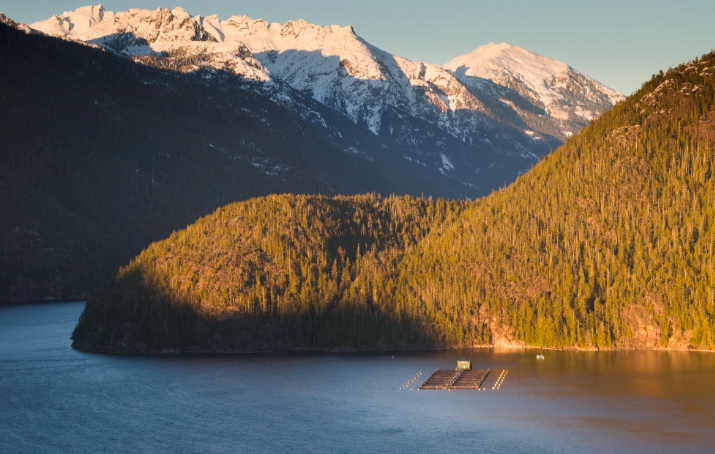
Wild Pacific salmon are in trouble across the entire North Pacific, and the reasons have almost nothing to do with a net pen off the B.C. coast. That single fact should reshape how Canada thinks about the Trudeau-era federal policy around open-net pen salmon farming. The pressure on wild salmon is an ocean-scale problem. Shutting down domestic food production on an artificial timeline does not solve it, and it hands Canada a second problem on top of the first.
The wild salmon story is an ocean story
Five countries commercially harvest Pacific salmon: Canada, the United States, Russia, Japan, and the Republic of Korea. All five have reported declines in abundance or size. In 2020, the total catch across all countries fell 37% in a single year, the largest one-year drop ever recorded. Catches rebounded in 2021, collapsed again in 2022, then swung back toward the highs of the 2010s in 2023. Large population swings across an entire ocean basin reveal underlying causes far larger than any one farm.
Canada's own experience fits the pattern. B.C.'s commercial salmon fishery collapsed between 2019 and 2022, running at roughly 7% of its long-term average. Japan's chum fishery has fallen sharply since around 2007 even though the country still releases close to two billion hatchery fish every year. That last detail matters, because it undercuts the intuition that more fish in the water means more fish coming back.
The science points to the ocean itself. Oceans absorb about 90% of the earth's excess heat, and the warming of the Pacific is generally believed to explain why salmon are increasing in Alaska and Russia while declining in Japan and B.C. Abundance has always been controlled in the ocean, where the vast majority of a salmon's feeding and rearing habitat sits. A small change in ocean survival produces a large change in how many adults come home. When the ocean's carrying capacity drops, adding more juvenile fish can even make things worse.
The Canadian government's own Standing Committee on Fisheries and Oceans has acknowledged there may be a Pacific salmon emergency in B.C. and across every salmon-producing country. Ottawa has committed $1.3 billion to Pacific salmon restoration, a commitment coastal First Nations support and want to build on.
The ban answers the wrong question
The forces bearing down on wild salmon are climate, ocean warming, habitat loss, and the collapse of the commercial fishery. The 2029 ban reaches none of them. What it does reach is a monitored, regulated, First Nations-led food sector operating in Canadian waters.
What it actually does is create a food problem. Canada already imports more than $700 million in farmed salmon every year from Norway, Chile, and Scotland. Farmed salmon makes up about 85% of the B.C. supply and produces roughly 380 million meals a year from around 56,000 tonnes of fish. Take that domestic production out during an affordability crisis and the demand does not disappear. It shifts overseas, to foreign producers, foreign prices, and foreign standards, with the fish flown in rather than raised at home.
What a made-in-Canada strategy looks like
Canada does not need to choose between wild salmon and a domestic food supply. It can have both, and a coherent national strategy would treat them as connected rather than opposed.
That strategy starts by keeping production here. Salmon farming in B.C. is already the most Canadian version of this industry anywhere: 100% of it is raised in partnership with local First Nations, sited in their traditional waters with their oversight, on a small footprint that recovers between crops. The feed is largely made in North America. The jobs, about 4,500 of them, are in coastal communities that have few other year-round options. The technology investment, hundreds of millions of dollars of it, is ready to flow into coastal B.C. the moment the policy allows.
It also means funding the wild salmon science that the ocean emergency actually demands. Coastal First Nations have proposed doing exactly that: with the ban lifted, partner companies would contribute funds toward wild salmon research and conservation through the Indigenous Centre for Aquatic Health Sciences, an Indigenous-led, peer-reviewed body focused on wild salmon and marine protection. That is a permanent, industry-supported funding stream for the science, built on top of the federal commitment rather than in place of it.
The practical choice in front of Ottawa
Canada can keep growing affordable salmon at home, with First Nations leadership and some of the strongest environmental standards in the world, and put real money into understanding what is happening to wild salmon in a warming ocean. Or it can close the domestic sector, import more fish, and leave the ocean science underfunded.
The first path lowers grocery pressure, protects coastal jobs, keeps investment in Canada, and advances economic reconciliation. The second does none of that and still does nothing for wild salmon. A made-in-Canada salmon strategy is the responsible version of this policy, and reversing the Trudeau-era 2029 net-pen ban is where it begins.
References
- BC Salmon Farmers Association. 2024. Caring for Wild Salmon: The Big Picture. In: Modern Salmon Farming in BC: A Review. Chapter 2.
- BC Salmon Farmers Association. 2024. Caring for Coastal BC. In: Modern Salmon Farming in BC: A Review. Chapter 1.
- North Pacific Anadromous Fish Commission. Annual commercial catch statistics, 1925 to 2022.
- Coalition of First Nations for Finfish Stewardship. Key Messages, 2026.
Frequently asked
What is actually causing wild Pacific salmon to decline?
The science points to the ocean itself. Oceans absorb about 90% of the earth's excess heat, and the warming Pacific is generally believed to explain why salmon are increasing in Alaska and Russia while declining in Japan and B.C. Habitat loss and the collapse of the commercial fishery add further pressure.
Would banning salmon farms help wild salmon?
The forces bearing down on wild salmon are climate, ocean warming, habitat loss, and the collapse of the commercial fishery. The ban reaches none of them. It removes a monitored, First Nations-led food sector while the real drivers continue.
What is a made-in-Canada salmon strategy?
Keeping salmon production in Canada, raised in partnership with local First Nations, while funding wild salmon science through the Indigenous Centre for Aquatic Health Sciences. It treats affordable food and wild salmon conservation as connected rather than opposed.
Coalition of First Nations for Finfish Stewardship