
How Industry-Funded Science Protects Wild Salmon
The Trudeau-era 2029 net-pen ban would shut down an industry already funding wild salmon science through Indigenous-led research.
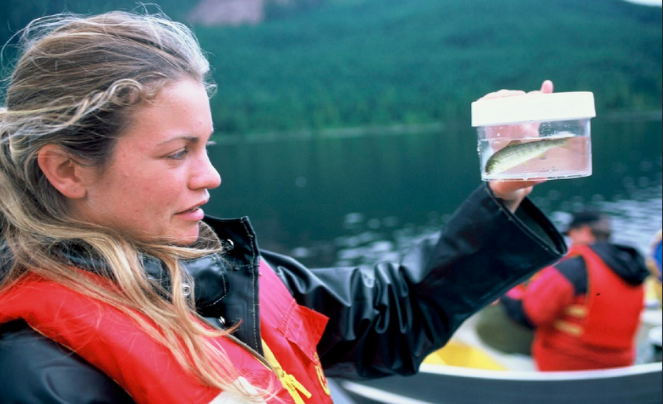
One of the stranger aspects of the debate over salmon farming in British Columbia is how rarely anyone discusses what the industry actually does for wild salmon.
There's plenty of noise about what farms supposedly do to wild fish. Less attention gets paid to the research infrastructure, the conservation funding, and the diagnostic science that salmon farmers pay for out of their own operations. If the Trudeau-era 2029 net-pen ban goes ahead, that funding goes with it.
An Indigenous-led science centre in the Campbell River region
The B.C. Centre for Aquatic Health Sciences sits in the Campbell River region. It is an ISO-accredited diagnostic laboratory that provides research, monitoring, and diagnostic services to both farmed and wild salmon programs across the coast.
The centre is currently transitioning into ICAHS, the Indigenous Centre for Aquatic Health Sciences and Stewardship. Under its modernized governance, ICAHS will be Indigenous-led, creating a shared space where coastal First Nations can apply traditional ecological knowledge alongside Western science to study and protect the marine environment.
As part of the coalition's plan, salmon farming companies would contribute funds from every pound of harvested farmed salmon towards wild salmon research and conservation through ICAHS. The funding would not come from the government. It would come directly from the operating industry, directed into science that benefits wild fish populations.
Dr. Ahmed Siah, the centre's managing director, has described ICAHS as a platform for dialogue among Indigenous Elders, scientists, industry, and community leaders working on conservation, sustainability, and the preservation of traditional cultures. The goal is practical: better data, shared between the people who live and work on the coast, informing decisions that protect wild salmon for the long term.
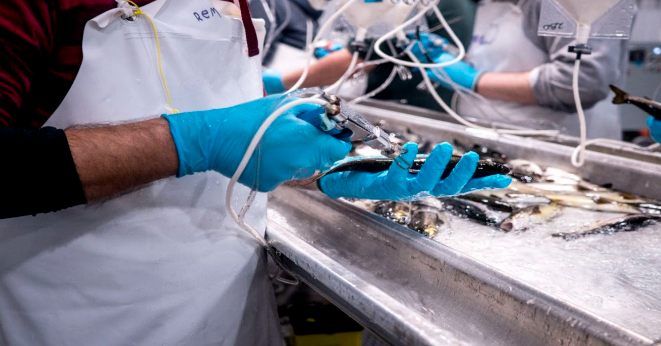
What the science actually shows
The concern behind the federal government's 2029 salmon farming ban is that farms harm wild salmon. Here is what four decades of data say.
Infectious disease kills about 3% of farm-raised salmon in B.C.'s marine environment each year. The remaining 97% are never infected with the pathogens, even while living beside each other in the same pens every day. If disease does not spread easily among fish packed into nets, the chance of it spreading to wild salmon dispersed across open ocean is lower still.
After the Cohen Commission examined concerns about Fraser River sockeye in 2012, the Canadian Science Advisory Secretariat conducted formal risk assessments on nine salmonid pathogens that have occurred on B.C. salmon farms. Every single assessment concluded that the risk to Fraser River sockeye populations was minimal.
The actual population data reinforces the point. Fraser River sockeye adult returns averaged 6.8 million per year before salmon farming began in the region (1962 to 1989) and 8.0 million per year during the salmon farming years (1990 to 2022). Broughton Archipelago pink salmon averaged 0.8 million before farms arrived and 1.1 million during the farming years. Wild salmon returns did not decline when farms were operating.
Seven layers of prevention
Salmon farmers did not arrive at a 3% infectious disease mortality rate by accident. Over 40 years, fish health teams working with veterinarians, regulators, and First Nations Rightsholders built a system of seven-layered safeguards. These include selective breeding for disease resistance, strict biosecurity protocols in hatcheries, barriers preventing pathogen transfer from hatcheries to marine sites, containment measures within and between marine sites, prescribed veterinary treatments, continuous monitoring and record keeping, and regulatory audits by DFO.
Each B.C. salmon farm reports roughly one fish health event per year to federal regulators. DFO independently audits approximately 18 randomly selected farms each quarter, sampling dying and recently deceased fish for disease. No other livestock sector in the world faces this level of government health auditing and public reporting.
Antibiotic use has dropped to less than 20% of its 1997 peak. Vaccines developed for major pathogens like IHN virus have eliminated outbreaks entirely since 2012. The sector did not wait for regulations to force these changes. Companies invested in the science because healthier fish are better business and better for the ocean.
What reversing the ban makes possible
The federal government has committed $1.3 billion to Pacific salmon restoration. Coastal First Nations in the coalition support that investment. ICAHS would build on it, adding a permanent, industry-funded research institution dedicated to wild salmon health and governed by the Nations who have stewarded these waters for thousands of years.
Reversing the Trudeau-era 2029 net-pen ban secures the funding source for that work. It keeps the companies operating whose contributions would pay for ICAHS research. It preserves the farms whose data contribute to the largest real-time monitoring dataset on salmon health anywhere on the B.C. coast.
Canada has a chance to build something most countries can only talk about: a domestic food production sector where the industry funds the science that protects wild ecosystems, governed by Indigenous peoples with the longest track record of environmental stewardship on the continent. Reversing the ban is a practical way for the government to fulfill its mandate.
References
B.C. Salmon Farmers Association. 2024. "Caring for Fish Health" in Modern Salmon Farming in B.C.: A Review. Campbell River, British Columbia.
B.C. Centre for Aquatic Health Sciences. Indigenous Centre for Aquatic Health Sciences and Stewardship (ICAHS) governance transition. Campbell River, B.C. cahs-bc.ca
Cohen Commission of Inquiry into the Decline of Sockeye Salmon in the Fraser River. 2012. Final Report, Volume 3.
Canadian Science Advisory Secretariat (CSAS). 2019-2021. Formal risk assessments of nine salmonid pathogens in British Columbia salmon farms.
DFO Open Data. Fish Health Events, Mortality Events, Carcass Classification, and Fish Health Audit Program data, 2006-2022.
Pacific Salmon Commission. Fraser River sockeye salmon adult return data, 1962-2022.
Frequently asked
What is ICAHS?
The Indigenous Centre for Aquatic Health Sciences is an ISO-accredited research lab in the Campbell River region, transitioning to Indigenous-led governance, that bridges traditional ecological knowledge with modern scientific methods to study and protect wild salmon.
How do salmon farmers fund wild salmon research?
Salmon farming companies contribute funds from harvested farmed salmon towards wild salmon research and conservation through ICAHS, funding diagnostic services, research projects, and conservation monitoring.
What would happen to this research if the 2029 ban proceeds?
If the Trudeau-era 2029 net-pen ban goes ahead, the industry funding that supports ICAHS research into wild salmon health and conservation would disappear along with the farms.
Coalition of First Nations for Finfish Stewardship