
Canada Can Grow More of Its Own Salmon. Federal Policy Is Standing in the Way.
Every year, BC produces 56,000 tonnes of farm-raised salmon. That is about 380 million meals. The federal government's 2029 salmon farming ban would remove that production from Canada's food system.
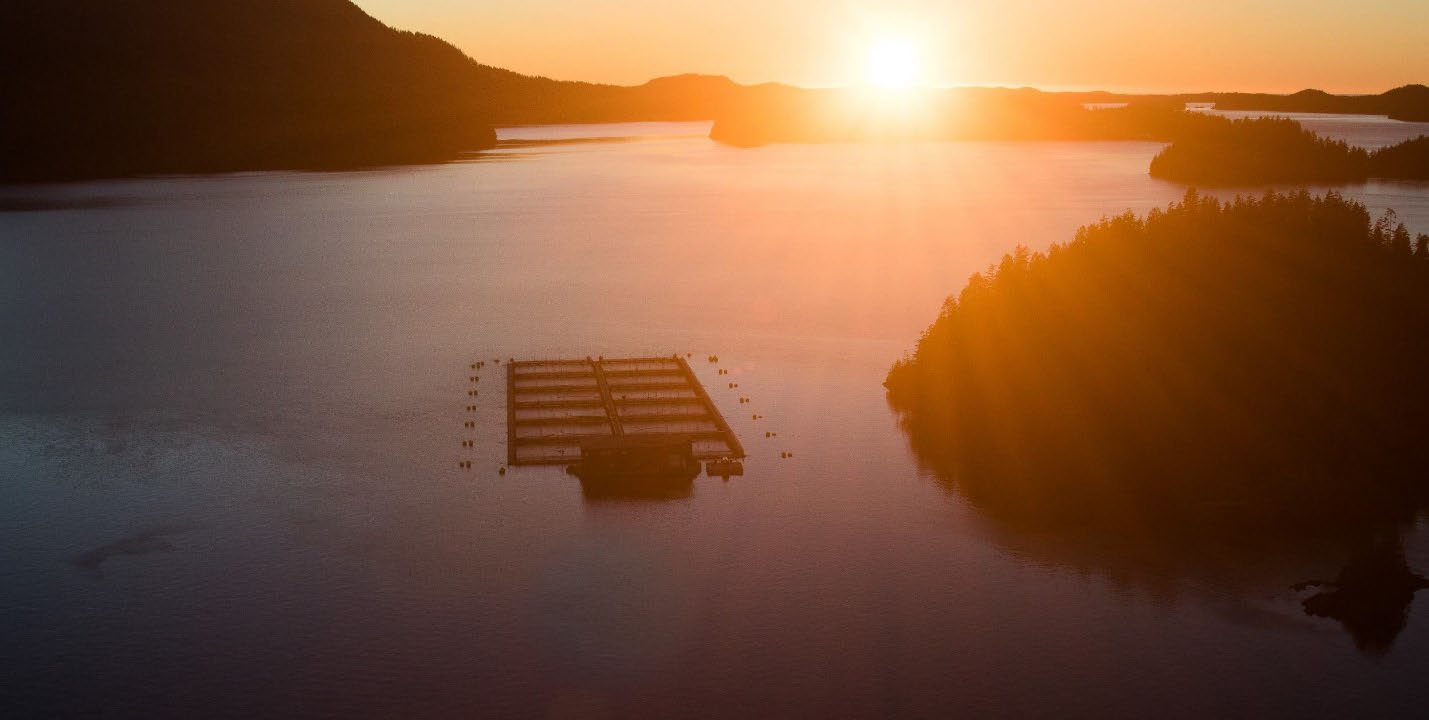
Canadian families are still feeling the pressure at the grocery store.
Food costs are high. Household budgets are stretched. Families are making harder choices about what they buy, what they cook, and what they can afford to put on the table.
That is why federal food policy matters.
When Canada can produce more of its own food, we should not make it harder to do so. When Canadian communities are ready to grow high-quality protein here at home, we should not force families to rely more heavily on imported food from overseas.
That is the problem with the 2029 federal net-pen salmon farming ban in British Columbia.
Every year, BC produces 56,000 tonnes of farm-raised salmon. That is approximately 380 million meals. Eighty-five percent of all salmon harvested in the province come from farms, not wild fisheries. Farm-raised salmon is BC's number one seafood commodity export and its top agri-food commodity export. From 2017 to 2021, it led the province in agricultural farm cash receipts, ahead of dairy, vegetables, and nursery plants.
The federal ban would remove that production from Canada's food system.
That is not a small policy change. It is a direct hit to the Canadian food supply.
The Demand Does Not Disappear
Canadians are not going to stop eating salmon because the federal government stops allowing more of it to be grown in Canada.
The demand will remain.
The supply will shift.
The cost to Canadians will increase.
If Canada removes BC farm-raised salmon from the market, the gap will be filled by imported salmon from countries such as Norway, Chile, and Scotland. In many cases, it will still be salmon raised in net pens, but under another country's rules, another country’s sustainability goals, another country's production system, and another country's economic strategy.
That raises a basic question.
Why would Canada choose to import more of a food product that Canadian workers, First Nations, and coastal communities are already producing here?
Right now, Canadian farm-raised salmon helps meet Canadian demand with Canadian supply. Feed is manufactured locally in BC, with roughly 80 percent of ingredients sourced from Canada and the United States. Processing happens in coastal communities. Jobs stay in Canada. Distribution is closer to home.
If that production is removed, Canadians become more dependent on foreign producers, foreign currency movements, global freight costs, shipping disruptions, and international supply chains.
That does not make food more affordable.
It makes Canada more exposed.
Canadian families will pay the difference.
This Is a Canadian Affordability Issue
Farm-raised salmon is one of the more accessible sources of high-quality protein and omega-3 fatty acids available in Canadian grocery stores. Health Canada, the American Heart Association, and Canada's Food Guide all recommend eating fish rich in omega-3s regularly.
For families already dealing with high grocery bills, higher salmon prices are not a small inconvenience.
They matter.
When domestic supply is reduced, families either pay more, buy less, or switch away from a healthy Canadian food option. That is not progress on affordability. It is the opposite.
The federal government has said it wants to make life more affordable. Reversing the salmon farming ban is one practical step it can take within its own control.
It will not solve every grocery bill problem. But it would help Canada protect domestic supply, support more stable access to Canadian-grown salmon, and avoid making families more dependent on imported food.
That is exactly the kind of practical action Canadians need.
This Is Also About Jobs, Communities, and First Nations Leadership
The impact of the ban does not stop at the grocery store.
A 2023 independent economic assessment estimated that BC's salmon farming sector generates approximately $1 billion in total annual economic activity, $223 million in family income, and 4,500 jobs. Many of those jobs are in remote Indigenous and coastal communities where there are fewer economic alternatives.
The regional numbers show what is at stake.
At peak production in 2019, Campbell River and the region accounted for 1,274 full-time equivalent jobs and $324 million in economic activity. Port Hardy and Port McNeill accounted for 512 jobs. The Comox Valley accounted for 193 jobs.
These are not abstract numbers.
They are paycheques. Small businesses. Local suppliers. Community revenues. Families. Young people decide whether they can stay in their home communities.
For many First Nations and coastal communities, salmon farming is not just an industry. It is part of a broader path toward economic self-determination.
As of 2022, the sector directly and indirectly employed more than 700 Indigenous people and provided $51 million in total annual direct economic benefit to First Nations communities.
The federal government has committed to economic reconciliation. That commitment should include supporting First Nations that have chosen to participate in modern salmon farming and are asking to keep building their own economies.
The Winners Are Not Canadian
If the ban goes ahead, Canada does not stop eating salmon.
Canada simply imports more of it.
Norway wins. Chile wins. Scotland wins. Their salmon farming sectors grow while Canada shuts down its own. Their companies gain more access to Canadian grocery shelves. Their workers benefit from production Canada could have kept here.
The technology investment ready to flow into coastal British Columbia will go elsewhere. It will move to countries where modern aquaculture is treated as part of the food future, not pushed out by federal policy.
That is a choice.
Canada can choose to grow more of its own food, support First Nations leadership, protect coastal jobs, and strengthen domestic supply.
Or Canada can choose to become more dependent on imported salmon.
Only one of those choices aligns with affordability, food security, food sovereignty, and Canada-first economic resilience.
The Practical Choice for Ottawa
This decision is within federal control.
The Government of Canada can reverse the 2029 ban. It can work with First Nations and industry on a responsible path forward. It can support modern salmon farming while continuing to invest in wild salmon protection, science, monitoring, and stewardship.
It is about building a Canadian food policy that is serious about affordability, food security, and the environment.
Canada needs more affordable food. Canada needs stronger domestic supply. Canada needs resilient communities. Canada needs First Nations and industry at the table as partners in solving national challenges.
Modern salmon farming can help.
Canadian food, grown in Canadian waters, by Canadians.
That is what is on the table.
The only thing standing in the way is federal policy.
References
(1) BC Salmon Farmers Association. (2024). Modern Salmon Farming in BC: A Review, Chapter 1: Caring for Coastal BC, p. 1-28.
(2) BC Salmon Farmers Association. (2024). Modern Salmon Farming in BC: A Review, Chapter 12: Food Safety, p. 12-2.
(3) Collins, B. & McCannel, J. (2019). Aquaculture on Vancouver Island. Vancouver Island Economic Alliance. [Ch13 ref 1]
(4) Agriculture and Agri-Food Canada. (2023). Book 4: Overview of the agriculture and agri-food sector. Government of Canada. [Ch13 ref 4]
(5) BC Salmon Farmers Association. (2024). Chapter 7: Feed Sustainability, p. 7-5.
(6) Skretting. (2022). Sustainability Report. As cited in Chapter 7, p. 7-15/16. [Ch07 ref 12]
(7) Government of Canada. (2024). Canada's Food Guide. [Ch12 ref 1]
(8) Rosenbloom, C. (2021). Your healthy fish guide. Heart and Stroke Foundation. [Ch12 ref 2]
(9) RIAS Inc. (2023). Economic and Financial Impacts of Minister Murray's Transition Plan for BC Salmon Farms. Prepared for BCSFA. [Ch13 ref 3]
(10) RIAS Inc. (2020). Raising Opportunity: How Farm-Raised Salmon Can Lead BC's Post-COVID Recovery. BCSFA. [Ch13 ref 2]
(11) First Nations for Finfish Stewardship. (2022). The Reality is: Salmon Farming is a path to self-determination and reconciliation for many First Nations in coastal BC. [Ch04 ref 15]
Frequently asked
How much salmon does BC produce annually?
British Columbia produces approximately 56,000 tonnes of farm-raised salmon per year, equivalent to roughly 380 million nutritious meals for Canadian families.
What would happen to salmon prices if the 2029 ban goes through?
Canada would need to import the same volume from Norway, Chile, and Scotland, adding international freight costs, currency exchange risk, and removing domestic pricing competition.
Coalition of First Nations for Finfish Stewardship