
B.C. Salmon Farming - What Canada's Food Safety Standards Are Worth at the Checkout
B.C. farm-raised salmon is tested plant by plant to Canadian food safety standards. The federal government's 2029 salmon farming ban trades an inspected, affordable protein for costlier imports with less oversight.
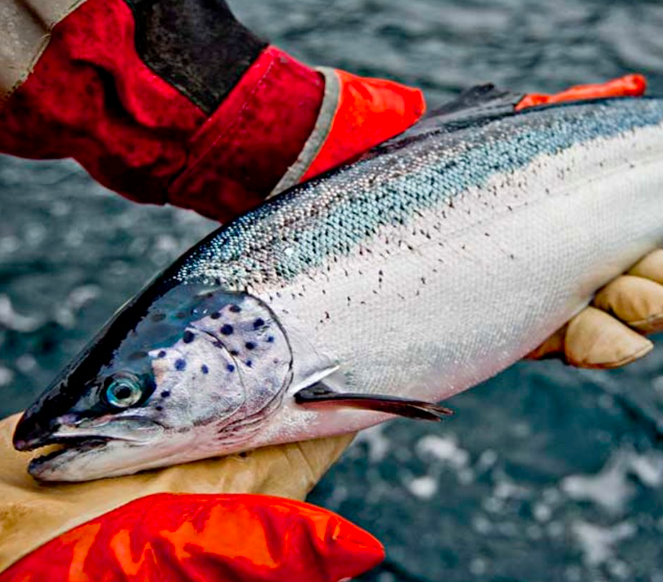
When a family picks up a fillet of B.C. farm-raised salmon, the price tag reflects more than the fish. It reflects a testing and inspection system that runs from the farm to the processing plant, paid for partly by the sector itself and partly by Canadian regulators. That system is one of the reasons the federal government's 2029 salmon farming ban deserves a second look, because removing 85% of the province's salmon supply does not remove the demand. It just moves the demand to foreign markets, with less Canadian oversight and a higher cost.
Start with what the standard actually involves. Every farm-raised salmon harvested in B.C. is processed in a licensed facility that follows Preventive Control Plans and Hazard Analysis and Critical Control Points (HACCP) principles. Fish are tested for heavy metals, pesticides, herbicides, antibiotics, dyes, dioxins, and other residues. The Canadian Food Inspection Agency (CFIA) tests run on every harvest at every processing plant. Health Canada's Veterinary Drug Directory sets the withdrawal times and residue limits for any approved treatment, and if a residue limit is exceeded, that product does not enter the food chain.
The results are reassuring. Mercury in B.C. farm-raised salmon sits at roughly 0.021 micrograms per gram, well below Health Canada's limit of 0.5 and similar to or lower than wild B.C.-caught salmon. Levels of PCBs come in up to 71 times lower than Health Canada's threshold for edible fish, and comparable to or lower than what you would find in beef, chicken, or pork. Growth hormones are not approved for farmed fish in Canada and are not used.
A safe protein that experts already recommend
This matters because farmed salmon is not a niche health food. It is one of the foods Canada's Heart and Stroke Foundation points people toward, a protein high in omega-3 fatty acids and low in mercury. The American Heart Association recommends eating fish rich in omega-3s twice a week. Those omega-3s have been shown to lower triglycerides, support eye health, and help maintain brain function as we age. B.C. produces about 56,000 tonnes of farm-raised salmon a year, enough for roughly 380 million meals annually. That is a meaningful share of the affordable, healthy protein on Canadian plates.
Third-party certification sits on top of the regulatory floor. All Atlantic salmon farms in B.C. carry Best Aquaculture Practices (BAP) certification, and many are also certified by the Aquaculture Stewardship Council (ASC). Each of those programs brings its own testing and food-safety requirements. The point is layered assurance: a Canadian regulator, a domestic processing standard, and an independent auditor all looking at the same fish.
What the ban does to the price tag
Here is where food safety and affordability meet. Right now, Canada imports more than $700 million in farmed salmon a year from Norway, Chile, and Scotland to satisfy Canadian demand. Pull 85% of domestic supply off the market through the Trudeau-era 2029 net-pen ban, and that import figure climbs. Imported salmon is not inspected at a Canadian plant the way domestic fish is. It arrives having met its country-of-origin rules and whatever border checks apply, which is a different thing from the plant-by-plant CFIA testing that B.C. salmon goes through before it reaches a grocery shelf.
So Canadian families would pay more, for a product carrying less domestic oversight, while a homegrown supply chain that already meets a high standard sits idle. The sector supports about 4,500 jobs annually, many of them in remote coastal communities, and 100% of salmon farmed in B.C. is raised in partnership with First Nations. None of that is replaced by a container ship from Europe or Chile.
Reversing the ban keeps a tested, domestically inspected, affordable protein on the table and the inspection system that backs it fully operational. It keeps the omega-3 recommendation from your doctor attached to a fish grown and checked at home, rather than one flown in from halfway around the world at a premium. A country thinking seriously about food affordability and food security has every reason to protect a supply it can actually inspect.
Safe, affordable, and Canadian is a combination worth keeping at the checkout.
References
- BC Salmon Farmers Association. 2024. Caring for Communities: Food Safety in Modern Salmon Farming in BC: A Review. Campbell River, British Columbia.
- BC Salmon Farmers Association. Economic Impact FAQ (2024 data).
- Health Canada, Veterinary Drug Directory residue limits and withdrawal periods.
- Canadian Food Inspection Agency, processing-plant residue and mercury testing.
- Heart and Stroke Foundation of Canada; American Heart Association dietary guidance on omega-3 fatty acids.
Frequently asked
Is B.C. farm-raised salmon safe to eat?
Yes. It is processed in licensed facilities under HACCP controls and tested by the Canadian Food Inspection Agency for mercury, PCBs, and other residues, with results well within Health Canada limits.
How is farmed salmon tested for safety in Canada?
Every harvest is tested at licensed processing plants for heavy metals, pesticides, antibiotics, and dioxins. Any product that exceeds residue limits does not enter the food chain.
Would the 2029 salmon farming ban affect food prices?
Removing 85% of B.C.'s salmon supply pushes Canadians toward imported salmon, which already exceeds $700 million a year and generally costs more than domestically inspected fish.
Coalition of First Nations for Finfish Stewardship