
B.C. Salmon Farming - Growing Canada's Ocean Economy Today.
Canada's own ocean economy plan names aquaculture a growth sector. Reversing the federal government's 2029 salmon farming ban lets coastal B.C. communities deliver on that plan.
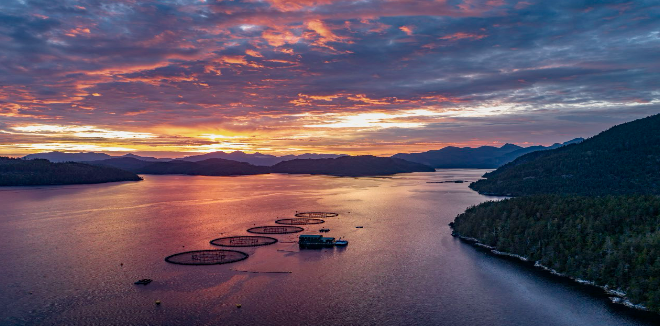
For several years, the Government of Canada has been building a Blue Economy Strategy. The purpose, in the federal government's own words, is to grow Canada's ocean economy, create jobs, and open opportunities for coastal communities while advancing conservation goals. The strategy names a short list of ocean-based sectors meant to carry that growth. Fish and seafood sits at the top of it, and aquaculture is named inside that category alongside commercial fisheries and processing.
That is a strong and welcome signal. Canada has looked at its ocean economy, decided it wants more of it, and identified salmon farming's home sector as a place to build.
The growth sector is already up and running
Canada's ocean industries generate about $30 billion in economic activity each year. The federal government describes that figure as a small fraction of the overall potential. Reaching more of that potential means growing our ocean-based sectors and aquaculture is one of the few that can scale quickly - the infrastructure and expertise already exist on the water today.
British Columbia is where that expertise lives. B.C. salmon farming generates close to $1 billion in total economic activity annually and supports about 4,500 jobs. About 85 percent of the salmon harvested in B.C. each year comes from farms. The sector pays an average wage roughly 30 percent above the provincial median, and it does so in places such as Port Hardy, Klemtu on the North Coast, and the Campbell River region, where steady year-round work is valued. Finally, 100% of salmon farmed in British Columbia is done in partnership with First Nations.
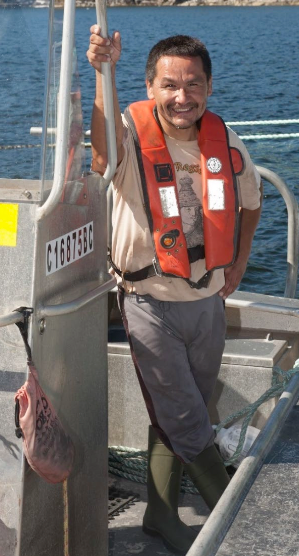
This is the part of Canada's ocean economy that is already delivering. It has the sites, the trained workforce, the supply chains, and the First Nations partnerships in place.
Reversing the federal government's 2029 salmon farming ban lets all of that contribute fully to the growth Canada has said it wants. The strategy and the sector are pointed at the same goal. The opportunity is to let them meet.
Canada's own consultation pointed the way
The Blue Economy Strategy reflected a clear federal recognition that Canada's ocean economy needed a more coordinated path forward. The federal government ran a multi-year, Canada-wide consultation and published feedback in a 2022 report titled Engaging on Canada's Blue Economy Strategy: What We Heard.
The recommendations in that report describe exactly the conditions the sector needs to grow. The consultation called on Fisheries and Oceans Canada to develop a five-year sustainable seafood development plan with measurable objectives, to foster sector certainty and predictability through government recognition, and to expedite the development of an aquaculture act. Importantly, it also recommended proactively supporting financing and capacity building for Indigenous-led operations.
Certainty and predictability. A long-term development plan. An aquaculture act. Support for Indigenous-led operations. Canada's own listening exercise laid out the path.
Reversing the Trudeau-era 2029 net-pen ban is the step that opens that path. It gives the sector the long-term horizon the consultation called for, makes room for the development plan and the aquaculture act, and it encourages coastal First Nations to keep building the Indigenous-led operations that Canada said it wants to support.
What this unlocks beyond one sector
The case for reversing the 2029 ban is often made on affordability, and that case is strong. Keeping domestic production in place helps keep Canadian salmon in Canadian grocery stores and reduces the pull toward imported fish from Norway, Chile, and Scotland. Canada brought in more than $700 million in farmed salmon imports in 2024, and growing the home supply gives families a more affordable, more reliable Canadian option.
The ocean economy connection adds something for a policy audience. Reversing the ban is a way for federal policy to deliver on federal strategy. The government has already decided, on the record, that it wants to grow Canada's ocean economy and that aquaculture belongs in that growth. Reversing this contradictory ban lets that decision take full effect in the place where it has the most immediate benefit.
For coastal First Nations in the coalition, this is also an economic reconciliation opportunity. The Blue Economy consultation recommended support for Indigenous-led operations, and members of the coalition are already running those operations. They are ready to keep building them, on their own terms, in their own territorial waters. This is reconciliation in practice.
A practical step the government can take
Reversing the ban is a decision within federal control. It aligns the 2029 policy with the Blue Economy Strategy, with the recommendations of Canada's own consultation, and with the affordability and food security goals the government has set for itself.
Canada has written down what it wants its ocean economy to be. The coastal communities and First Nations ready to deliver it are already on the water. The opportunity now is to bring federal policy and federal strategy together, so the growth Canada has targeted can begin.
References
- BC Salmon Farmers Association. 2024. Caring for Coastal British Columbia, in Modern Salmon Farming in BC: A Review. Campbell River, British Columbia.
- Fisheries and Oceans Canada. 2022. Engaging on Canada's Blue Economy Strategy: What We Heard. Ottawa, Ontario.
- BC Salmon Farmers Association. 2024. The Big Picture: What Is Happening to British Columbia Salmon in the Ocean, in Modern Salmon Farming in BC: A Review. Campbell River, British Columbia.
Frequently asked
Does Canada's federal government see aquaculture as a growth area?
Yes. The federal government has been developing a Blue Economy Strategy that lists fish and seafood, including aquaculture, among the ocean sectors it wants to grow. Canada's ocean industries generate roughly $30 billion in annual economic activity, which the government itself describes as a small fraction of the potential.
How much does B.C. salmon farming contribute now?
B.C. salmon farming generates close to $1 billion in total economic activity annually and supports about 4,500 jobs, most of them in coastal communities where steady work is valued. About 85 percent of the salmon harvested in B.C. each year is raised on farms, and 100 percent of it is done in partnership with First Nations.
What did Canada's own consultation recommend for the sector?
The federal Blue Economy consultation, summarized in the 2022 report Engaging on Canada's Blue Economy Strategy: What We Heard, recommended sector certainty and predictability through government recognition, a five-year sustainable seafood development plan, and faster development of an aquaculture act.
Coalition of First Nations for Finfish Stewardship