
B.C. Salmon Farming - Building Canada's Food Supply at Home
Canada imported $700M in farmed salmon in 2024. The federal government's 2029 salmon farming ban would deepen import dependence when Canadians face rising food prices.
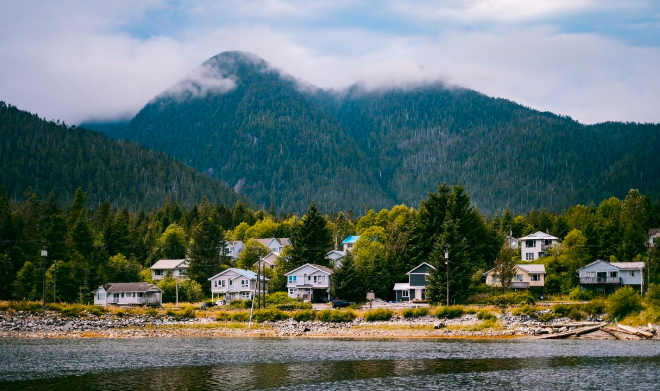
Canada has the longest coastline in the world. It also imported more than $700 million in farmed salmon from Norway, Chile, and Scotland in 2024. Those two facts do not sit comfortably beside each other, and they have been moving further apart since 2019, when policy uncertainty around the Trudeau-era 2029 net-pen ban began contracting domestic production capacity in B.C.
The trajectory is straightforward. As Canadian supply shrinks, the gap fills with fish flown in from elsewhere.
Eighty-five percent of salmon served on dinner plates in B.C. comes from farms. Those farms produce roughly 380 million meals each year and support 4,500 annual jobs in coastal communities. Take that supply off the market in 2029 and the demand does not vanish with it. Canadians still buy salmon. They are just forced to buy it from somewhere else.
The federal government's 2029 salmon farming policy leaves this question unanswered: where does the replacement fish come from, and what is Canada giving up when it relies on foreign supply rather than domestic?
A staple protein, three foreign suppliers
Norway, Chile, and Scotland produce most of the farmed salmon that crosses the Canadian border. A staple grocery item that Canadians buy every week now sits on the other side of three foreign supply chains, each with its own risk exposures.
Norway sells primarily into Europe and prices their product accordingly. Chile sits at the end of a long Pacific shipping route, and contends with periodic algal blooms and freshwater pressures on its hatcheries. Scotland produces at a smaller scale and ships through the Atlantic logistics network that has been disrupted repeatedly in recent years.
When any one of those links strains, the cost shows up on Canadian receipts. Canada's Food Price Report 2026 forecasts food price increases of 4 to 6 percent in the coming year, with seafood among the categories most exposed to currency movement and trade disruption. A policy that increases that exposure, works against affordability. A policy that reduces it, works for affordability.
What domestic production actually does
Salmon raised in B.C. waters is harvested, processed, and packed in Canada. Feed mills in Surrey and Vancouver supply the farms with ingredients drawn largely from North America. Marine service providers, mechanics, transport contractors, and small businesses throughout Vancouver Island and the central coast form the supplier network around each farm site. The annual economic activity it generates stays in Canadian communities rather than leaving as import payments.
One hundred percent of salmon farmed in B.C. is done in partnership with First Nations. First Nations who host salmon farms in their territories hold equity in many of these operations and run the impact-benefit agreements that govern how the work proceeds. Many First Nation entrepreneurs have launched successful businesses that rely on the salmon farms to operate. First Nation farmers are ready to keep building this sector. Reversing the Trudeau-era ban keeps that path open.
There is no equivalent capacity standing by to replace 56,000 tonnes of Canadian-grown protein. The ban does not relocate production to other coasts or to land-based facilities at the scale required. It removes supply. The replacement comes from abroad.
A practical step within federal control
The federal government has spoken consistently about reducing Canada's dependence on supply chains the country cannot control. Reversing the 2029 ban is a step in the same direction. It does not require new spending or new legislation. It requires policy clarity that allows existing operations to continue and new investment to flow into coastal communities that are ready to receive it.
The ban also runs against the government's stated commitments on Canada-first economic resilience, on Indigenous economic participation, and on building food systems that hold up when global conditions shift. Reversing it brings those commitments into alignment with what is happening on the water.
A stronger Canadian food supply starts on Canadian coasts. The infrastructure, the workforce, the First Nations partnerships, and the demand are all here. The only piece missing is policy that allows the sector to keep growing.
References
- BC Salmon Farmers Association. 2024 Trade and Production Data: Farmed Salmon Imports from Norway, Chile, and Scotland.
- Statistics Canada. Aquaculture Statistics, British Columbia Salmon Production.
- Charlebois, S., et al. Canada's Food Price Report 2026. Dalhousie University, University of Guelph, University of Saskatchewan, and University of British Columbia. December 2025.
- First Nations for Finfish Stewardship Coalition. Coalition Production and Employment Data, B.C. Salmon Farming Sector.
- Government of Canada. Canada's Blue Economy Strategy: Supporting Domestic Aquaculture and Coastal Food Production.
Frequently asked
How much salmon does Canada import from other countries?
Canada imported more than $700 million in farmed salmon from Norway, Chile, and Scotland in 2024. The volume has grown steadily since 2019 as domestic production capacity in B.C. has contracted under policy uncertainty around the 2029 net-pen ban.
Would the 2029 salmon farming ban affect Canadian food prices?
It would deepen Canada's dependence on imported salmon at a moment when Canada's Food Price Report 2026 forecasts food price increases of 4 to 6 percent, with seafood among the categories most exposed to currency movement and trade disruption. Domestic supply reduces that exposure.
Why does Canada import salmon from Norway, Chile, and Scotland?
Those three countries produce most of the farmed salmon that crosses the Canadian border. Each has its own currency, climate, and logistics exposure, and none of them respond to Canadian market conditions. The concentration means Canadian buyers absorb the cost when any one of those supply chains strains.
Coalition of First Nations for Finfish Stewardship