
The Healthiest Protein in the Grocery Store Is About to Get More Expensive.
Health Canada recommends eating omega-3 rich fish regularly. Farm-raised salmon is one of the most accessible options. The federal government's 2029 salmon farming ban puts that at risk.
Health Canada recommends eating fish rich in omega-3 fatty acids regularly. Canada's Food Guide says the same. So does the American Heart Association. So does the Heart and Stroke Foundation.
Farm-raised salmon is one of the most accessible ways for Canadian families to follow that advice. It is high in protein, rich in omega-3s, low in mercury, and available year-round in grocery stores across the country.
The federal government's 2029 salmon farming ban would reduce Canada's domestic supply of salmon. That matters for affordability. It also matters for health.
What the Health Experts Actually Recommend
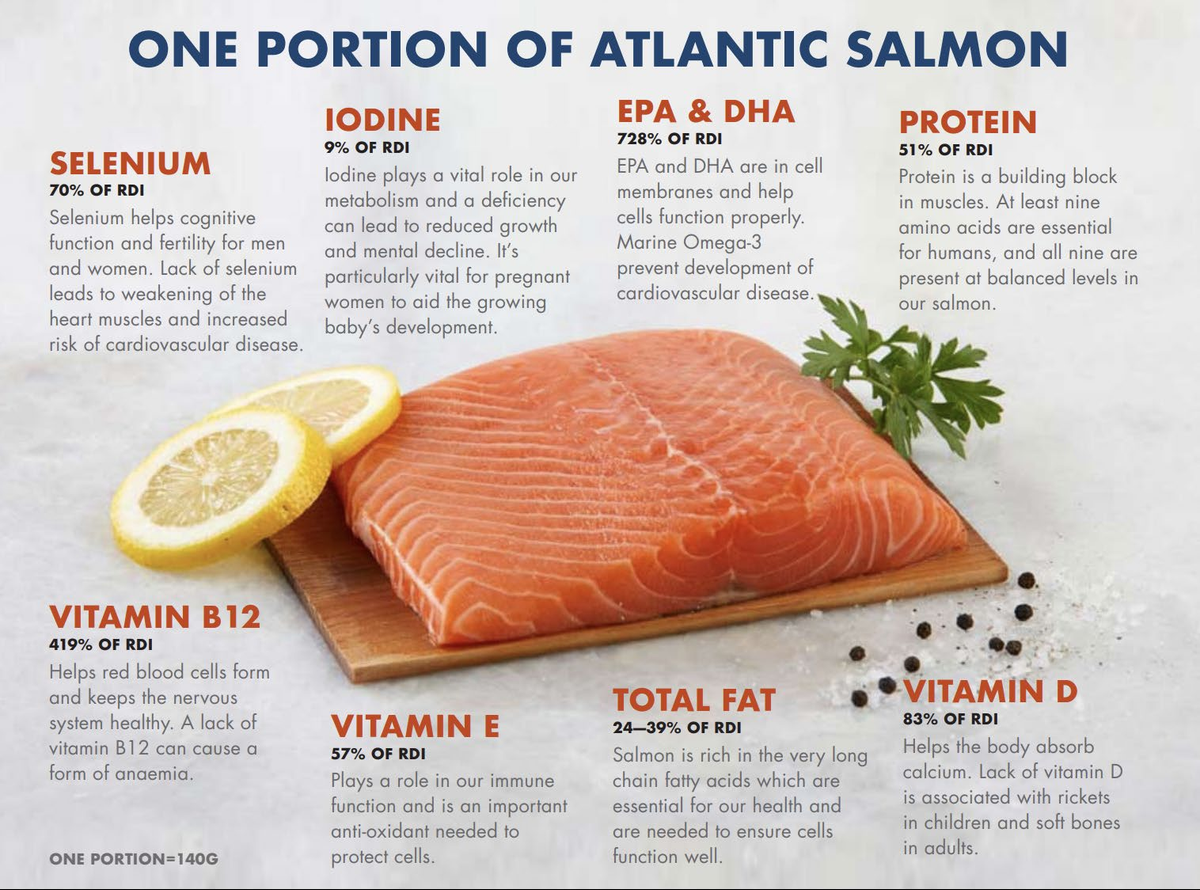
Omega-3 fatty acids have been shown to reduce triglycerides, lower the risk of irregular heartbeat, slow the build-up of arterial plaque, and may help lower blood pressure. They support eye health, brain health, and help reduce cognitive decline. The American Heart Association recommends eating fish rich in omega-3s at least twice a week.
Canada's Heart and Stroke Foundation specifically recommends eating fish that is high in omega-3s and low in mercury - such as Atlantic salmon - as part of a heart-healthy diet.
Farm-raised salmon fits that recommendation precisely. It is nutrient-dense, widely available, and more affordable than many other omega-3 rich options. For families trying to eat well on a budget, it is one of the more practical choices in the grocery store.
What Canadians Are Actually Eating
BC produces approximately 56,000 tonnes of farm-raised salmon every year. That is enough for roughly 380 million meals. Eighty-five percent of all salmon harvested in the province comes from farms.
This is a significant part of Canada's protein supply. It is also a significant part of how Canadian families access the kind of food their doctors and health authorities tell them to eat.
The 2029 salmon farming ban would remove that supply. It would not remove the demand. Canadians would still want to eat salmon. They would just have to buy more of it from Norway, Chile, and Scotland - at import prices, with import logistics, under another country's food safety framework.
In 2024, farmed salmon imports from those three countries into Canada already totaled over $700 million. The ban would increase that dependence.
Safe, Tested, and Regulated
Farm-raised salmon in BC is regularly tested by both the sector and the Canadian Food Inspection Agency for antibiotics, pesticides, heavy metals, PCBs, and other residues. Results consistently show that levels of contaminants are well within safe eating limits, and in many cases are similar to or lower than those found in wild-caught salmon.
Mercury levels in BC farm-raised salmon are well below Health Canada's limit of 0.5 micrograms per gram - measured at 0.021 micrograms per gram, which is similar to or lower than wild BC-caught salmon.
PCB and dioxin levels in farm-raised Atlantic salmon from BC are up to 71 times lower than Health Canada's threshold.
Growth hormones are not approved for use in farm-raised fish in Canada. None are used.
There are no genetically modified farm-raised salmon produced in BC.
Antimicrobial use has decreased dramatically over the past 20 years due to improvements in production, health management, and selective breeding. Most bacterial infections can now be prevented with vaccines. The few antimicrobials that are licensed for use can only be prescribed by a licensed veterinarian, only to treat a diagnosed clinical disease, and all usage must be reported to the Department of Fisheries and Oceans.
The Affordability Connection
When domestic supply of a healthy, recommended food is reduced, families face a choice. Pay more. Buy less. Or switch to something else.
None of those outcomes help affordability. None of them help public health.
The federal government has committed to making life more affordable for Canadians. It has also invested in public health messaging encouraging Canadians to eat more fish. The 2029 salmon farming ban works against both of those commitments.
Reversing the ban would help protect Canadian families' access to one of the most affordable sources of heart-healthy protein available in Canadian grocery stores. It would keep domestic supply stable. It would avoid pushing more demand toward imported fish at higher cost.
That is a practical step the government can take within its own control.
References
(1) Government of Canada. (2024). Canada's Food Guide. [Ch12 ref 1]
(2) Rosenbloom, C. (2021). Your healthy fish guide. Heart and Stroke Foundation. [Ch12 ref 2]
(3) Mayo Clinic Staff. (2023). Omega-3 in fish: How eating fish helps your heart. [Ch12 ref 3]
(4) Domènech, B.E. & Marfany, G. (2020). The Relevance of Oxidative Stress in the Pathogenesis and Therapy of Retinal Dystrophies. Antioxidants. [Ch12 ref 4]
(5) Giudici, K.V. (2021). Nutrition-Based Approaches in Clinical Trials Targeting Cognitive Function. Journal of Prevention of Alzheimer's Disease. [Ch12 ref 5]
(6) Ikonomou, M.G. et al. (2007). Flesh Quality of Market-Size Farmed and Wild British Columbia Salmon. Environmental Science & Technology. [Ch12 ref 7]
(7) Health Canada. (2020). Maximum Levels for Chemical Contaminants in Foods. Government of Canada. [Ch12 ref 8]
(8) BC Salmon Farmers Association. (2024). Modern Salmon Farming in BC: A Review, Chapter 12: Food Safety, p. 12-1 to 12-10.
(9) Fisheries and Oceans Canada. (2022). Use of therapeutants. Government of Canada. [Ch12 ref 13]
Frequently asked
Is farm-raised salmon healthy to eat?
Yes. Farm-raised salmon is high in omega-3 fatty acids, low in mercury, and recommended by Health Canada, Canada's Food Guide, and the American Heart Association as part of a heart-healthy diet.
Are growth hormones used in farm-raised salmon?
No. Growth hormones are not approved for use in farm-raised fish in Canada and are not used.
Coalition of First Nations for Finfish Stewardship